The AH-6 Little Bird returns to Battlefield 6 in Season 2 (Update 1.2.1.0) as the game’s premier scout helicopter. Designed for speed, precision, and surgical harassment, the Little Bird fills the gap between transport utility and heavy attack dominance. It is not a forgiving vehicle—its durability is low, its exposure windows are punishing, and its effectiveness scales almost entirely with pilot discipline and coordination.
In the right hands—especially a coordinated pilot/gunner duo—the Little Bird becomes one of the most oppressive air assets in the current meta. In the wrong hands, it is a 90-second respawn timer waiting to happen.
In this guide, we’ll break down:
- The Little Bird’s role in Season 2’s vehicle ecosystem
- Core stats, survivability traits, and sustain mechanics
- Mastery unlocks and optimal loadout paths
- Solo vs. duo viability and meta tier placement
- Flight handling fundamentals and altitude discipline
- Infantry, armor, and helicopter engagement strategy
- How to counter IGLA threats and stationary AA
- Spawn economy management and disengage triggers
If you plan to fly it, understand this early: this is a scalpel, not a sledgehammer. And if you hover, you die.

What Is the Little Bird in Battlefield 6?
The AH-6 Little Bird represents Battlefield 6’s scout helicopter class, filling the reconnaissance and light attack role between transport helicopters and heavy gunships. Originally available exclusively in Portal mode, the Little Bird returns permanently in Season 2 Update 1.2.1.0 as the primary light air asset for NATO forces.
Historical Context:
The Little Bird holds legendary status among Battlefield veterans, particularly those who played Battlefield 3 and 4, where it defined high-skill air gameplay. Its absence at launch was a major community pain point, and its reintroduction in Season 2 is a direct response to player feedback. Battlefield Studios noted in the 1.2.1.0 patch overview that this iteration is tuned specifically for the high-lethality environment of the new maps, emphasizing that “the Little Bird does not forgive ego.”
Launch History:
The Little Bird’s journey in Battlefield 6 has been unusual:
- Launch (October 2025): Portal mode exclusive.
- Post-Launch Removal: Removed for balancing and flight model tuning.
- Season 2 Return (February 17, 2026): Added to standard Conquest and Escalation rotations via Update 1.2.1.0.

Little Bird Vehicle Specifications and Loadout
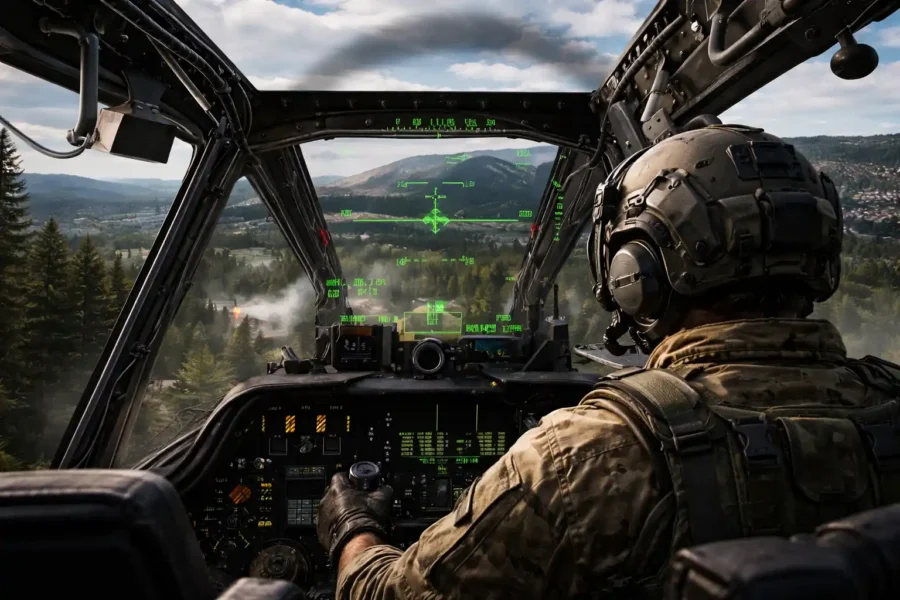
The Little Bird’s design emphasizes speed and maneuverability over raw firepower. It is a precision instrument that rewards pilots who understand its mechanical limits.
Technical Specifications:
| Attribute | Rating / Tier |
| Health Pool | Low (Vulnerable to concentrated small arms fire) |
| Top Speed | Among the fastest rotorcraft in the game |
| Default Secondary | 70mm FFAR Light Rockets |
| Countermeasure | Short-cooldown IR Flares |
| Respawn Timer | ~90 Seconds (Varies by mode and map) |
| Passive Repair | Begins after a short window of zero damage |
| Resupply | Steady in-air regen / Rapid reset at base helipads |
Progression and Unlocks:
The Little Bird features a linear Mastery track that fundamentally changes its competitive viability.
- Pilot Equipment: Target Designator – Available by default. This occupies the pilot equipment slot and is essential for solo pilots to mark armor for friendly Engineers.
- Mastery 5: Engine Upgrade – Noticeably improves vertical thrust and climb speed. While powerful for escaping locks, it increases control sensitivity.
- Mastery 6: .50 Cal Rotary MG – Replaces standard Miniguns. Features higher component damage, allowing you to disable rotors and engines more effectively.
- Mastery 7: Directional Jammer – Gunner Seat Unlock. Creates a narrow frontal “cone of protection” that negates lock-ons from the direction the gunner is facing.
- Mastery 15: Interference – A passive hull upgrade that increases the time required for enemy AA launchers to achieve a solid lock.


Frame and Durability:
- Physical Characteristics:
The Little Bird features the smallest profile in the air roster. Skilled pilots use this to fly through hangars or under bridges to break line-of-sight. However, its lightness is its undoing; a single well-placed tank shell or recoilless rocket will result in an immediate “Vehicle Destroyed” notification. - Vehicle Disable States:
Damage to the tail rotor results in a “Rotor Disabled” state, causing uncontrollable yaw (spinning). If this happens, immediately gain altitude and reduce banking inputs to stabilize. If you are below 20m altitude when the rotor is disabled, bailing is often the only way to survive.
Offensive Armament:
- Dual Miniguns / .50 Cal Rotary:
The standard miniguns are excellent for exposed infantry, but the .50 Cal (Mastery 6) is the competitive choice. It allows the pilot to effectively harass light armor and APCs, creating openings for ground-based anti-tank teams. - Light Rockets (70mm FFAR):
These rockets feature moderate splash damage. In Season 2, they are best used to flush infantry out of cover or finish off a vehicle whose armor has been softened. Pro Tip: Fire in short volleys of 2–4 to maintain steady pressure and avoid a long empty reload window.
Crew Positions and Equipment:
- Pilot Seat: Controls all flight and primary/secondary weapons. High-level solo play relies heavily on constant movement to compensate for the lack of a dedicated gunner.
- Co-Pilot/Gunner Seat:
- Thermal Camera (Baseline): Arguably the most powerful spotting tool in the current vehicle meta. It cuts through the fog of VL-7 gas clouds on Contaminated.
- Directional Jammer (Mastery 7): Requires total synergy. The gunner must aim the jammer directly at the threat source.
- Passenger Seats: The Little Bird features two exterior “bench” seats. Passengers can fire personal weapons and use gadgets like Repair Torches. While passengers can repair mid-flight, the Little Bird’s fragility means this is rarely enough to outpace focused anti-air fire—it is best used for a quick sustain boost while retreating.

Little Bird Flight Characteristics and Handling

The Little Bird’s flight model is built on “Energy Management.” It accelerates extremely quickly compared to other rotorcraft, but is the least forgiving of pilot error.
Mobility Advantages:
The AH-6 can perform “Snap-Turns“—high-speed banking maneuvers that allow for a near-instant reversal of direction. This is the primary method for evading pursuit by attack helicopters.
Altitude Discipline:
- 60m–90m (Recon Band): Stay here to scout and avoid most small arms fire.
- Sub-40m (Strike Zone): Only enter this band for a confirmed strafing run.
- Terrain Masking: Stay as low as possible when retreating to place hills/buildings between you and an incoming missile.
Little Bird Combat Tactics and Strategy

The “54m Rule” is a critical Season 2 update. Unsuppressed firing spots you on the minimap at 54m. Maintain an altitude above 60m during reconnaissance to remain “stealthy,” only diving in for the strike.
Comparison vs. Attack Helicopter:
Do NOT fight Attack Helicopters head-on. They possess superior health and frontal firepower. Your only winning strategy is to flank; use your superior agility to stay behind their “turning circle” and chip away at their rotors. If you lose the flanking advantage, disengage immediately.

Gas Zone Interaction (Contaminated):
Pilots are protected from gas effects inside the cockpit. While there is a minor visual vignette common to all vehicles in gas, you maintain much higher clarity than infantry. Use the gas clouds as visual cover; infantry visibility is heavily restricted unless they are running thermal optics, allowing you to strike with near-impunity.
Helicopter Combat and Dogfighting:
The IGLA Threat: Season 2’s 9K38 IGLA requires active guidance. Skilled Engineers can re-acquire a lock after you flare if you remain exposed. The moment you flare, you must dive for cover or break line-of-sight; do not assume the flare gives you a “free pass” to continue loitering.
Little Bird Counters and Weaknesses

Anti-Air Threats: The Stationary AA on Objective D (Contaminated) has long-range coverage across most of the central valley. Identify if this gun is manned before making a pass. If active, stay low and use mountain ridges to mask your signature.
Common Pilot Mistakes:
- The Ego Hover: Staying stationary to finish a kill. This invites a tank shell.
- Over-Flaring: Popping flares the moment a “Locking” warning appears. Wait for the pitch shift that indicates the missile is “Incoming.”
- Greed: Trying to “tank” damage from an LMG squad. You will lose that trade every time.

Little Bird Map Availability and Spawn Management
The Little Bird’s return is governed by the “Spawn Economy.” Because only one or two typically spawn per team, losing one early is a disastrous blow to your team’s reconnaissance capability.
Spawn Competition:
In high-population matches, multiple players will be monitoring the destruction timer (approx. 90 seconds). Avoid “revenge spawning” immediately after death if the enemy team has established a base-camping AA presence.
Confirmed Map List:
- Conquest: Manhattan Bridge, Operation Firestorm, New Sobek City, Mirak Valley.
- Escalation: Manhattan Bridge, Eastwood, Operation Firestorm, New Sobek City, Mirak Valley.
Little Bird Mastery Tips and Advanced Techniques

Season 2 Meta Verdict:
- Solo: B-Tier (Viable only with extreme skill/terrain usage).
- Duo: S-Tier (Dominant through Jammer/Thermal synergy).
Disengage Triggers (When to run):
- Two simultaneous lock warnings: You cannot flare both successfully.
- 50% HP and no immediate cover: You are one lucky LMG burst away from a disable.
- Gunner Down: If your gunner bails or dies, your “Cone of Protection” is gone. Retreat and wait for a teammate.

Objective Timing:
The best time to strike is during enemy revive attempts or after a friendly unit engages in armor. When an enemy tank draws the attention of ground Engineers, they are less likely to be looking for a Scout Helicopter.
Final Tactical Note:
This is a scalpel, not a sledgehammer. A pilot who prioritizes survival over “one more kill” provides more value through constant harassment and spotting. Respect the ground fire, utilize your gunner, and never-ever hover.

Frequently Asked Questions
How do you unlock the Little Bird in Battlefield 6 Season 2?
The Little Bird becomes available in standard Conquest and Escalation playlists in Season 2 (Update 1.2.1.0). It does not require a purchase, but you must compete for the limited air vehicle spawn slot at your team’s base. Only one or two typically spawn per team, depending on the map.
Is the Little Bird good in Battlefield 6?
Yes — in the hands of a coordinated duo, it is considered S-Tier in Season 2. However, it has a very high skill floor and low durability, meaning inexperienced pilots will struggle. Its effectiveness scales heavily with positioning and movement discipline.
What is the best Little Bird loadout in Season 2?
The competitive meta loadout is:
- .50 Cal Rotary (Mastery 6)
- Directional Jammer (Mastery 7)
- Engine Upgrade (Mastery 5)
This setup maximizes component damage, survivability against lock-ons, and vertical mobility for disengaging from IGLA threats.
How do you counter IGLA missiles in the Little Bird?
Do not flare on the initial lock warning. Wait for the “Incoming” indicator, deploy flares, and immediately break line-of-sight using terrain or buildings. The IGLA in Season 2 allows re-acquisition, so staying exposed after flaring will often result in a second lock.
Can the Little Bird survive small arms fire?
Not for long. Concentrated LMG fire from a coordinated squad can force a retreat within seconds. The key is altitude discipline and never hovering inside infantry engagement range.
Is the Little Bird better solo or with a gunner?
With a gunner, it becomes dramatically stronger. The Directional Jammer combined with Thermal Camera creates survivability and spotting synergy that solo pilots cannot replicate. Solo play is viable but significantly harder.
What altitude should you fly the Little Bird at?
Maintain 60m–90m for reconnaissance and scouting. Drop below 40m only for short, confirmed strafing runs. Staying too low for extended periods makes you vulnerable to rockets and concentrated small arms fire.
How do you dogfight Attack Helicopters with the Little Bird?
Never fight head-on. Use your superior agility to stay behind their turning circle and target rotor components. If you lose positioning advantage, disengage immediately — their frontal firepower will win the trade.
Does the Little Bird take gas damage on Contaminated?
No. Pilots inside the cockpit are protected from VL-7 gas damage. This makes the Little Bird especially powerful on Contaminated, as you can use gas clouds as visual cover while the infantry suffer restricted visibility.
What does the Directional Jammer actually do?
The Directional Jammer creates a frontal cone that blocks incoming lock-ons from the direction the gunner is facing. It does not provide 360-degree protection. Proper communication between the pilot and gunner is required for maximum effectiveness.
How long is the Little Bird respawn timer?
The respawn timer is approximately 90 seconds after destruction, though it may vary slightly depending on the mode and map. Because only one or two spawn per team, losing it early can severely limit air dominance.
What are the Little Bird’s biggest weaknesses?
Its low health pool and vulnerability to coordinated anti-air are the primary weaknesses. Tail rotor damage can cause uncontrollable spinning, often leading to crashes if flown at low altitude. Overextending for kills is the most common cause of death.
How do you deal damage effectively with the Little Bird?
Use short rocket volleys (2–4 at a time) rather than dumping your entire payload. Combine .50 Cal component damage with rockets to disable vehicles efficiently. Always strike during distraction windows — such as when enemy Engineers are focused on friendly armor.
Can passengers repair the Little Bird mid-flight?
Yes, passengers can use Repair Torches while seated on the exterior benches. However, repairs rarely outpace focused anti-air fire, so this tactic is best used during disengagement rather than active combat.
Is the Little Bird the best aircraft in the new season?
In coordinated play, many consider it the most oppressive aircraft addition in Season 2. Its agility, spotting capability, and lock-on counterplay give it strong map control potential. However, its impact depends entirely on pilot skill and discipline.