Hollow Knight: Silksong shifts the series’ focus to the cursed kingdom of Pharloom, where Hornet’s agility and new systems redefine the pace and challenge of exploration. The sequel, a game many thought they might have to wait forever for, builds on the foundation of the original game while introducing major overhauls in movement, combat, and progression. Team Cherry has crafted an experience that feels both familiar and refreshingly new.
In this guide you’ll find:
- The world of Pharloom and its vertical design
- Hornet’s abilities and agile combat style
- Core systems: Crests, Tools, Silk, and Bind
- Crafting, quests, and the two-tier economy
- Enemy variety, bosses, and difficulty curve
- Technical performance, settings, and PC requirements
- Launch reception, pricing, and industry impact
- A verdict summarizing strengths and considerations

The World of Pharloom: A Kingdom of Ascent
Silksong trades the dark, descending depths of Hallownest for the vast, haunted kingdom of Pharloom. This is a land ruled by a strange curse. The core objective presents a clear directional contrast to the first game: a great ascent to a shining citadel at the kingdom’s peak. This vertical focus fundamentally shapes the world’s design, creating an intricate, layered kingdom where exploration is less about delving ever deeper and more about transitioning from claustrophobic caverns like the Moss Grotto to windswept vistas. Players who search carefully will find many branching paths that lead to valuable secrets.
The world of Pharloom is designed to be a massive experience, with its scale poised to rival or even exceed that of Hallownest. The inclusion of multiple towns and a formal quest system further expands its potential size. A key sign of this expanded scope is the number of benches, which serve as save points; Silksong features around 100, suggesting a far denser and more varied world. Don’t be surprised if you get lost exploring a new location like the Deep Docks.
Visually, the world is a stunning evolution of the series’ acclaimed art style. The visual design is rich with detail, featuring multiple layers that create a deep parallax effect. This is complemented by a powerful orchestral score and meticulous sound design that adds a grounded realism to the experience, which is a nice touch.
A New Protagonist: The Abilities of Hornet

The new protagonist, Hornet, brings a significant change to gameplay with her enhanced agility and distinct combat style, resulting in a much faster-paced experience. Unlike the silent Knight, Hornet is a vocal character who engages in dialogue, offering a more direct form of storytelling and a deeper look into the main story.
- Advanced Mobility: Hornet is far more mobile than her predecessor, transforming traversal into a fluid system of momentum-based movement. She can use her needle and thread to grapple across gaps, pull herself towards enemies, and chain actions together to stay airborne. These new powers expand her navigational toolkit.
- Dynamic Combat: This heightened mobility is intrinsically linked to a faster and more aggressive combat system. Hornet can perform diagonal attacks to strike foes, execute a drill-like maneuver with her nail, and deliver a powerful charge that can hit multiple targets. Silksong Hollow Knight also introduces a dedicated parry mechanic, rewarding precise timing with both safety and an offensive opening.
Core Gameplay Systems and Mechanics
Silksong introduces several new systems that add significant depth and complexity to exploration, combat, and character progress.
Customization: Crests & Tools:
The widely praised Charm system has been replaced by a more intricate system that encourages specialized build-crafting.
- Crests: These are the foundation of your build, each featuring a specific number of colored sockets (red, blue, yellow). Crucially, Crests also grant passive effects that fundamentally alter Hornet’s attacks, such as the “Claw Crest,” which changes her standard slash into a claw-like swipe.
- Tools: These are the active and passive abilities—effectively your weapons—slotted into Crests. Red Tools are purely offensive, while Blue and Yellow Tools are more passive and utility-focused.
- Build Philosophy: This system requires players to commit to a playstyle. It makes sense in the context of Hornet’s established identity as a master craftswoman.
Resources and Healing: Silk:
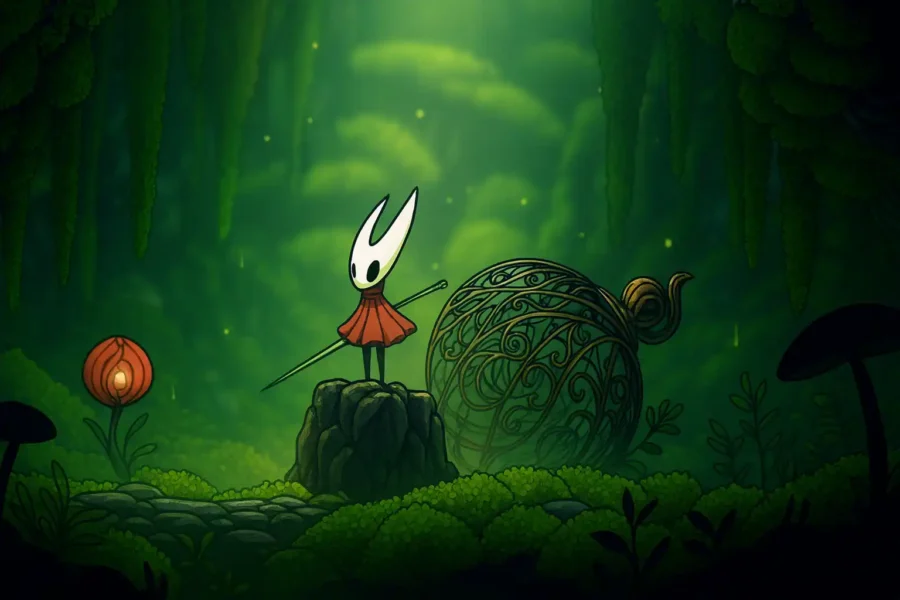
The primary resource has changed from Soul to Silk. This resource fuels powerful special attacks. Silk is also used for the redesigned healing system. Hornet uses a spool of silk to instantly bind her wounds, but this action consumes the entire spool. This “all or nothing” approach forces a crucial tactical decision: heal minor damage now, or risk continuing the fight to save the resource for a more desperate moment? Managing this is key to staying alive.
Crafting, Quests, and Economy:
- Crafting: Players gather shell shards from most defeated enemies to repair and recharge their consumable Tools, creating a gameplay loop where combat is necessary for resource upkeep.
- Economy: A rarer currency, dropped only by specific enemies, is used for major purchases, creating two distinct economic tiers. This scarcity is compounded by an in-game world where many interactions, from resting on benches to opening gates, require payment.
- Quests: A formal quest system provides structured objectives found on notice boards, ranging from hunting a specific beast for rare materials to helping an NPC. You won’t want to miss these.
The Challenge: Enemies and Difficulty

Silksong is an inherently more challenging experience than its predecessor, a result of its faster combat, more complex mechanics, and a formidable new bestiary. In a way, it leans even more into its Dark Souls inspiration.
- Enemy Variety and Complexity: Pharloom is populated with over 200 new enemy types. These enemies have been designed with more complex behaviors; players will encounter foes that coordinate their attacks, agile hunters that match Hornet’s own speed, and new flying enemies you can’t just spam attacks on. The worst mistake you can make is underestimating even a common foe in a new room.
- Boss Encounters: The game features over 40 unique boss fights. They serve as intense skill-checks, demanding mastery of Hornet’s full moveset. While the difficulty is comparable to or slightly higher than the original’s toughest bosses, they appear much earlier in the game’s progression.
Tailoring the Technical Experience
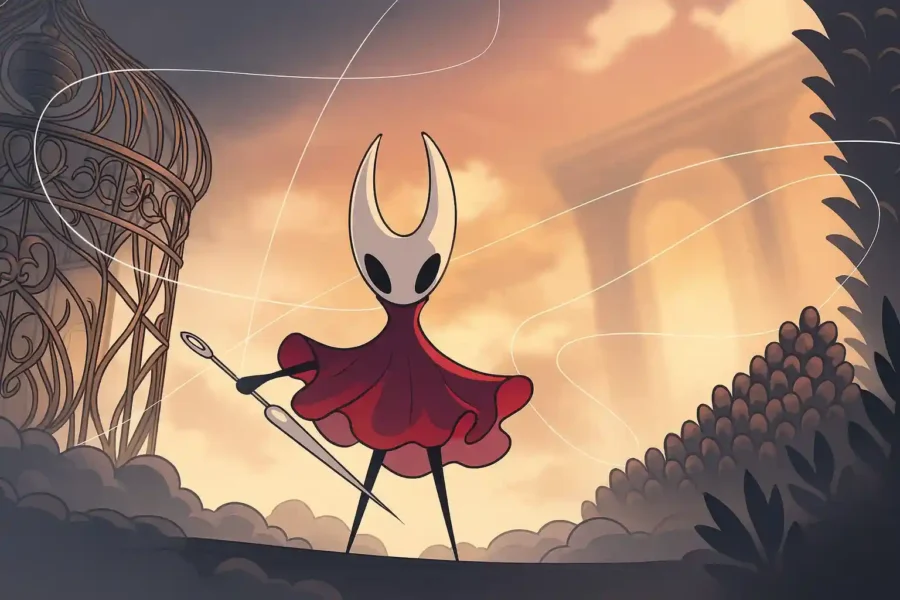
Silksong demonstrates flawless performance and offers a robust suite of options to allow players to fine-tune their experience.
- Display & Performance: A 120Hz mode is available. Performance is stable across all consoles, including the Nintendo Switch and Xbox Series X, with resolution being the main distinction.
- Customization Settings: Players can adjust the HUD size (or turn it off), toggle camera shake, and fully remap the controls.
- PC System Requirements: The game is not overly demanding. Recommended specs include an Intel Core i5-3470 CPU, 8 GB of RAM, a GPU like the NVIDIA GeForce GTX 1050, and 8 GB of installation space.
Launch and Industry Impact
The release of Silksong was a monumental event. The incredible demand led to server instability as players rushed to finally get their hands on the game. Perhaps the most significant discussion, judging by online comments, has been its $20 price point. In an era of rising game prices, its success serves as a powerful message about value and quality. Of course, this means Silksong is not only affordable but is also backed by a developer with a proven commitment to meaningful updates.
Verdict: A Worthy, Demanding Successor
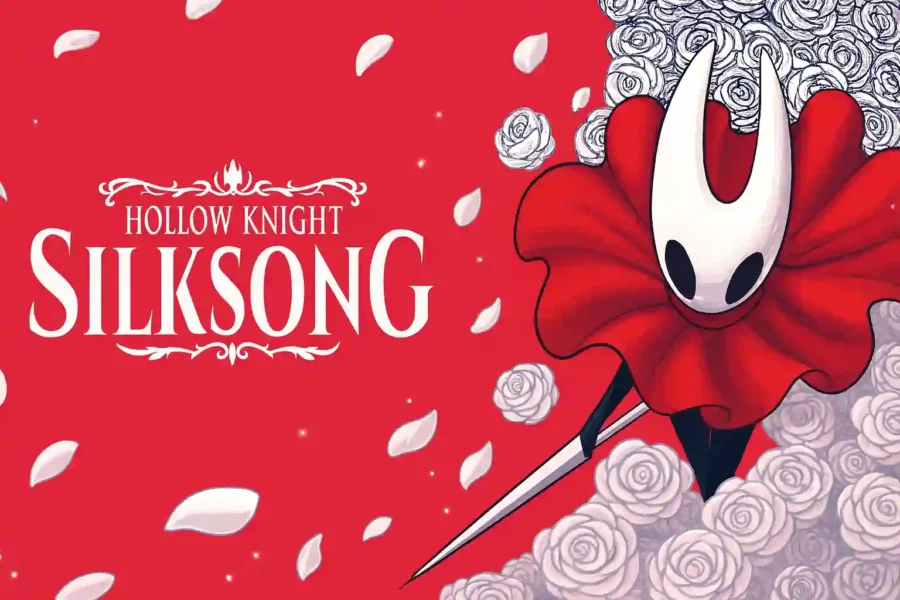
Silksong is a masterful sequel that successfully expands on the original’s foundation in nearly every way. It is a more complex, challenging, and faster-paced game that rewards skill and dedication with an unforgettable journey.
Strengths:
- Evolved combat and movement systems that are fast, fluid, and deep.
- Masterful world design, with stunning art and an immersive atmosphere.
- Deep and engaging character customization through the Crest and Tool system.
- Exceptional value, offering a massive, high-quality experience at an accessible price.
Considerations:
- The difficulty is significantly higher from the outset and may be daunting for newcomers.
- The new Crest and Tool system, while deep, is less intuitive than the original’s beloved Charm system.
- The initial progression is more guided and linear than the open-ended exploration of the first game’s early hours.

Epiccarry: best wow boost and coaching services
Frequently Asked Questions
What is Hollow Knight: Silksong about?
Hollow Knight: Silksong is the sequel to the acclaimed indie title Hollow Knight. Instead of playing as the Knight, players take control of Hornet, who is captured and taken to the kingdom of Pharloom. Her journey is focused on escaping and ascending to the citadel at its peak. The game emphasizes exploration, resource management, and combat mastery in a hostile, beautifully hand-crafted world.
How is Pharloom different from Hallownest?
Pharloom contrasts Hallownest by being designed as an ascent rather than a descent. Instead of burrowing deeper into underground layers, you steadily climb upward through biomes that stack vertically. This creates a sense of progression from dark caverns to bright open areas. Pharloom also features more towns, structured quests, and NPC interactions, making it livelier than Hallownest’s isolated ruins.
How many benches are in Hollow Knight: Silksong?
Silksong includes around 100 benches, compared to 51 in the original release of Hollow Knight. Benches serve as save points and customization hubs, and their abundance indicates both a larger game world and a recognition of the higher difficulty, giving players more opportunities to recover and adjust their builds.
Who is the playable character in Silksong?
Hornet, who previously acted as both rival and ally in Hollow Knight, is now the protagonist. Unlike the silent Knight, she has dialogue and interacts vocally with other characters. This change shifts the tone of storytelling, making it more direct and giving the player a clearer sense of Hornet’s personality and role in Pharloom’s unfolding events.
What makes Hornet’s movement different?
Hornet’s toolkit emphasizes speed and fluidity. She can grapple to enemies or terrain with her needle and thread, double jump, climb ledges, and briefly float. Movement is built around chaining actions together for momentum, turning platforming into a flowing rhythm rather than methodical step-by-step progression. This makes traversal faster but also introduces more demanding platforming challenges.
How does combat in Silksong differ from Hollow Knight?
Combat is much more aggressive. Hornet’s needle offers quick thrusts and extended reach, while diagonal dashes and drill strikes open new attack angles. The dedicated parry mechanic adds depth, rewarding precise timing with both damage prevention and counter opportunities. Together, these changes encourage constant movement, making fights feel like fast-paced duels rather than slower, deliberate exchanges.
What is the Crest and Tool system?
Instead of Charms, Silksong uses Crests and Tools. Crests determine your playstyle by granting passive abilities and providing sockets for Tools. Each Crest has red, blue, or yellow sockets that limit what Tools you can equip. This forces players to plan builds carefully rather than freely stacking abilities, leading to specialized strategies suited for different areas or encounters.
What are red, blue, and yellow Tools in Silksong?
- Red Tools are offensive, including bombs, projectiles, and high-damage strikes.
- Blue Tools are defensive or utility-based, such as lava protection or shields.
- Yellow Tools are focused on exploration, like light sources or navigation aids.
The color-coded socket system means your chosen Crest directly influences your combat and survival approach, creating variety in builds.
How does Silk replace Soul in Silksong?
Hornet gathers Silk instead of Soul. This resource fuels both her spells and healing, creating tension between offense and defense. Silk fills as Hornet deals damage or interacts with certain mechanics. Since it is consumed entirely when healing, the system forces deliberate choices: spend Silk to unleash a strong attack, or save it to restore health in emergencies.
What is the Bind healing system?
Bind instantly restores Hornet’s health but at the cost of the entire Silk spool. This means you can’t heal incrementally like in Hollow Knight — healing is a high-stakes decision. Bind is also interruptible, so timing and positioning are crucial. The mechanic emphasizes resource management and rewards players who carefully balance healing against offensive Silk abilities.
Does Silksong include crafting?
Yes, crafting is integrated into progression. Enemies drop shell shards that are used to repair and recharge Tools, while rarer materials contribute to forging new items. This system ties combat and exploration to progression directly, ensuring players are constantly rewarded for engaging with enemies and scouring the environment for resources.
How does the quest system work in Silksong?
Silksong introduces structured quests via notice boards and NPCs. These are divided into categories such as gathering, hunting, or exploring. Quests may involve defeating unique monsters, finding rare resources, or assisting townsfolk. Unlike the looser side stories of Hollow Knight, this system gives players more tangible goals and rewards, while still maintaining the freedom to explore at their own pace.
How many enemies and bosses are in Silksong?
Pharloom hosts over 200 unique enemies and more than 40 bosses. Enemies are designed with advanced behaviors — some coordinate attacks, while others counter Hornet’s mobility. Boss fights appear earlier and often demand mastery of parries, dashes, and build synergy. The sheer variety of encounters ensures combat feels fresh throughout the entire ascent.
Is Silksong harder than Hollow Knight?
Yes, difficulty is higher from the beginning. Enemies strike faster, bosses appear earlier, and the Bind healing system is less forgiving. However, the abundance of benches, stronger movement options, and versatile customization systems balance the challenge. Veterans will find the difficulty satisfying, while newcomers may need patience to adapt to the game’s demanding pace.
What technical options does Silksong have?
Silksong runs at a stable 60FPS on most platforms, with 120Hz options for supported displays. Resolution varies by hardware, with 4K available on newer consoles and PCs. The game also includes comfort-focused options such as adjustable HUD size, screen shake toggles, full button remapping, and audio sliders, making it flexible for different playstyles and accessibility needs.
What are the PC system requirements for Silksong?
Silksong is optimized for modest systems. The recommended setup is an Intel Core i5-3470, 8GB RAM, and an NVIDIA GTX 1050 with 8GB storage space. This ensures that most modern PCs, even budget-friendly ones, can run the game smoothly at high settings without performance issues.
How much does Hollow Knight: Silksong cost?
The game launched at $20, a price point praised for its accessibility. Considering the amount of content, boss variety, and polish, it is seen as exceptional value compared to rising industry prices. Many players regard it as one of the best cost-to-content ratios in recent years.
Does Silksong have multiple towns?
Yes. Pharloom includes several towns and settlements where Hornet can interact with NPCs, pick up quests, and purchase upgrades. This creates a more social and structured feel compared to Hollow Knight, where the world was mostly empty and isolated. The towns provide narrative depth and act as safe zones amid the kingdom’s dangers.
How does Silksong handle currency?
The game uses a two-tier economy. Shell shards act as a common resource for repairing and maintaining Tools, while a rarer currency is used for major purchases and unlocking progression. Even simple actions like resting at some benches or opening pathways may require payment, making resource management more critical and rewarding exploration that uncovers hidden wealth.
What makes Silksong stand out as a sequel?
Silksong expands on every aspect of Hollow Knight — bigger world, faster combat, more complex systems, and greater variety. It maintains the challenging, rewarding gameplay loop but introduces enough innovation to feel fresh. Its combination of depth, artistry, and affordability has made it one of the most anticipated and celebrated sequels in indie gaming.