The new wave-based PvE survival event, Marvel Rivals‘ Zombie Mode, has arrived, offering a cooperative experience against hordes of the undead. This is a limited-time event running from October 23 to November 14, 2025, as part of the game’s seasonal content. This guide provides a comprehensive breakdown of its mechanics, from the fundamentals to the advanced meta builds and boss strategies required to conquer its most formidable challenges, whether solo or with a team.
In this guide you’ll find:
- Core mechanics and progression systems of the Marvel Rivals’ Zombie Mode.
- Breakdowns of permanent upgrades, rewards, and blessing combinations.
- Meta builds and strategies for all playable heroes.
- Detailed boss and wave breakdowns for Nightmare IV difficulty.
- Tips for team composition, survivability, and solo play.
Zombie Mode Basics: Rules, Flow, Difficulty Tiers
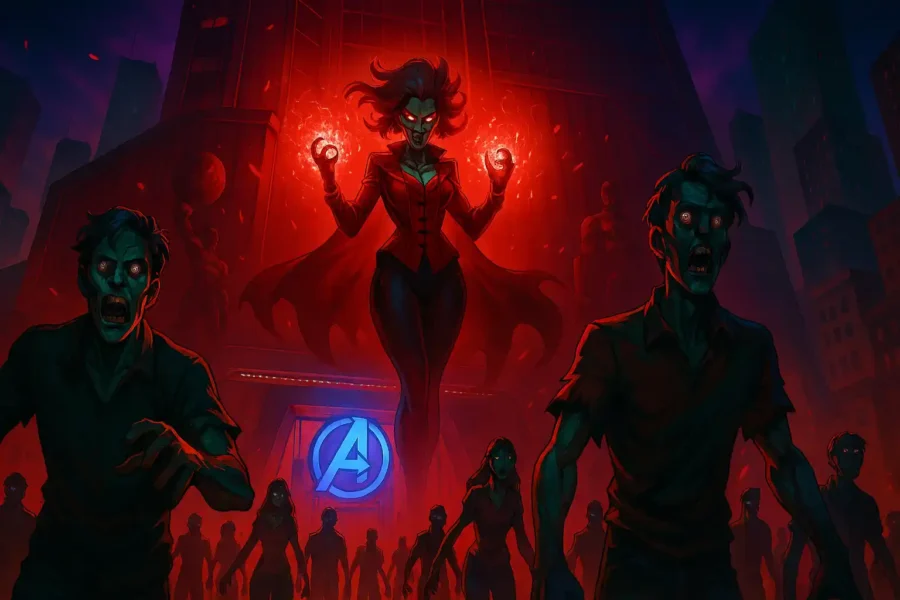
The Marvel Rivals’ Zombie Mode is a four-player cooperative engagement where squads face relentless waves of zombies, mini-bosses, and two main bosses: Zombie Namor and the Queen of the Dead, Scarlet Witch.
Playable Heroes (No Hero Lock)
A specific roster of five heroes is available: Blade, Magik, The Punisher, Thor, and Jeff the Land Shark. Notably, there are no character limits, allowing for unconventional team compositions, such as a squad of four Jeff the Land Sharks.
Permanent Progression: Traits & Ability Variants
Before a match begins, you can prepare your chosen hero with permanent upgrades that are unlocked and improved through gameplay.
- Traits: By playing the mode, you gain points that can be assigned to character-specific Traits. These are stat trees (referred to by their in-game color tags, e.g., Red, Blue) that offer passive bonuses like increased single bullet damage or a faster rate of fire. Points can be reassigned freely between runs to experiment with different builds.
- Ability Variations: Each hero has alternate versions of their abilities that can be unlocked, offering different functionalities. For example, Punisher’s turret can be modified into a mobile Relentless Pursuit, Blade’s shotgun can become a Daywalking grappling hook for mobility, and Magik can equip Mortal Will to disable her ultimate in exchange for a powerful permanent boost to health and damage.

Navigating the Apocalypse: Gameplay Mechanics

Permanent Progression: Traits & Ability Variants
The mode offers seven levels of difficulty: Normal, Hard, Extreme, Nightmare I, Nightmare II, Nightmare III, and Nightmare IV. To progress, teams must beat the current tier to unlock the next one. Higher tiers offer a greater challenge but also increase the rate at which you earn progression rewards.
Moon Power & Blessings (In-Run Upgrades)
Instead of a starting set of buffs, players earn Moon Power between each wave. This currency is spent immediately to purchase temporary Blessings (cards) that power you up for the current run. Hoarding Moon Power provides no benefit; it should be spent each wave to keep pace with the scaling difficulty. If the shop doesn’t offer what you need, it is always better to spend Moon Power to reroll for a required blessing. A full team wipe will result in a failed run, forcing a complete restart from Wave 1.
Solo Viability & Scaling
While designed for four players, the Marvel Rivals’ Zombie Mode can be cleared solo. Success in solo play is highly dependent on using an optimized meta build, as you will lack the support of teammates to draw enemy aggression or provide revives. Enemy scaling appears to adjust, but a solo player must be prepared to handle all threats and mechanics alone.
Rewards & Meta Progression (Level 25 Cap)
Completing matches and objectives rewards you with experience (XP) and resources used for permanent upgrades. Heroes level up to a maximum of 25 via mode XP. Progression in the form of unlocked Traits and Ability Variations carries over between runs, making your heroes progressively stronger. Rewards primarily consist of the resources needed for this system, but event-specific cosmetics (like Halloween-themed skins and sprays) can also be earned through challenges.
Zombie Enemy Types

As the waves progress, more formidable zombies will appear.
- Enhanced Zombies: Highlighted in red, these foes exhibit greater speed.
- Soldier Zombies: A tactical threat, these zombies throw grenades that must be avoided.
- Shielded Soldiers: Tank-like enemies equipped with a shield and baton, capable of absorbing significant damage.
- Exploders: Special enemies that can one-shot players with their powerful blasts on higher difficulties, forcing priority targeting.

Nightmare IV Meta: Damage Scaling Over Abilities

On Nightmare IV, a balanced build is a failed build. The meta shifts dramatically, favoring extreme specialization and a few key principles.
- The “Slingshot” Effect: The goal is to identify a few crucial stats and stack them relentlessly. This creates a “slingshot” point where a character’s power level suddenly skyrockets, allowing them to trivialize threats. Funneling all Trait points into one Trait Tree is key to achieving this.
- A Critical Warning: The Ineffectiveness of Abilities: A crucial lesson from high-tier play is that most character abilities and ultimates do not scale with the blessings acquired during a match. Using an ultimate will often result in a net loss of damage compared to a fully-buffed primary attack. As a general rule, ignore abilities in favor of primary attacks, saved only for their brief defensive properties like invulnerability.
- The Revive Safety Net: Always purchase Revive Tokens from the Store > Items menu before a run, but conserve them for the final, most difficult waves. On Nightmare IV, most enemies can defeat a player in a single hit, and these tokens are a crucial safety net against a late-game wipe.
- The Random Blessing Trap: Do not waste Moon Power on the “random” blessing option. The meta strategy is to reroll the shop to find the specific, powerful blessings your build needs for a consistent run.
Best Team Comps for Nightmare IV
While four of the same hero is a viable strategy, a mixed team can offer better tactical advantages. The established meta composition for top-tier clears is often three Blades and one Jeff the Land Shark, leveraging Blade’s overwhelming damage and Jeff’s utility. Alternatively, a mix of ranged damage dealers (Punisher/Thor) and durable melee specialists (Blade/Magik) allows for better aggro spread.
Blessing Priorities by Difficulty (Normal–Nightmare IV)
The strategic focus on blessings shifts dramatically as you climb the difficulty tiers.
| Difficulty | Build Focus | Blessing Priority |
| Normal–Extreme | Flexible / Experimental | Mixed (Fun or Utility) |
| Nightmare I–II | Focused Damage Scaling | Red/Primary Attack |
| Nightmare III–IV | Pure Meta | Damage %, HP Thresholds, Damage Reduction |

Best Builds for Nightmare IV (All Heroes)
This section details the optimal hyper-offensive meta builds for each character, designed to trivialize the highest difficulty of this Marvel Rivals event.
Blade Build — Best Melee DPS (Red Tree)
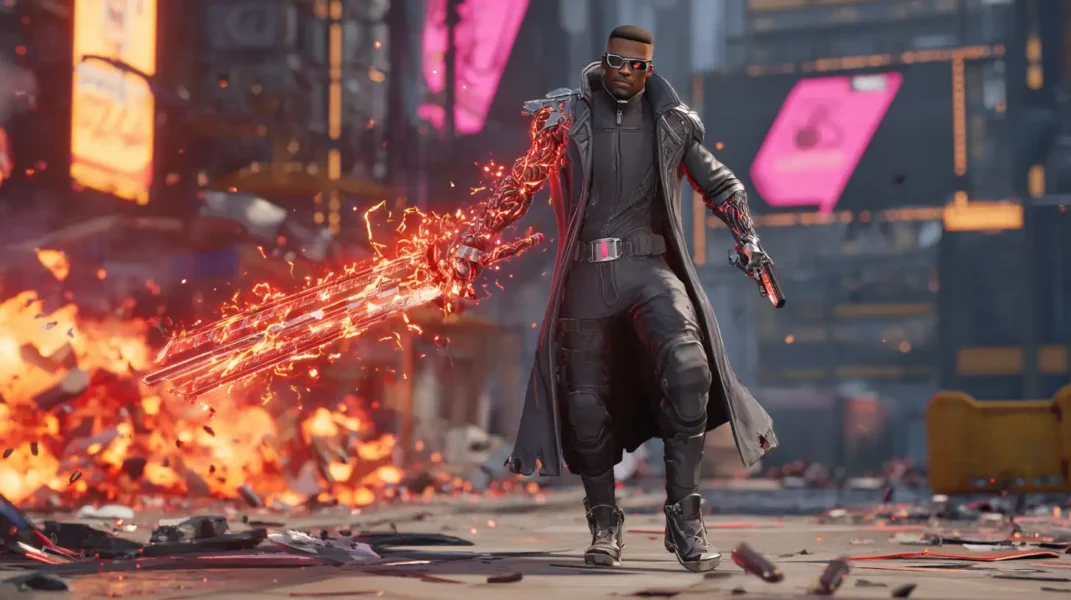
Blade is widely considered the most effective hero for this mode. This build transforms him into a vortex of continuous damage.
- Preparation: Invest all Trait points exclusively into the Red Trait Tree. For abilities, Day Walking offers superior mobility.
- Blessing Strategy:
- The First Rule: Immediately upon spawning, activate Bloodline Awakening (vampire mode). This ability has an infinite duration, but if you are defeated, your first action upon reviving must be to reactivate it.
- Red Cards (Core): Aggressively refresh the shop to find the three cornerstone blessings: On the Hunt (sword damage), Swift Edge (attack speed), and Sweeping Edge (attack range). Actively avoid cards that buff the dash or ultimate (Thousand Cuts).
- Blue Cards: Purchase Sacrifice Sigil one time only for its excellent crowd-control effect.
- Purple Cards: Prioritize Moonlight’s Protection (damage resistance) and rare Max HP cards until you reach the 12,000 HP benchmark required for the final boss.
- Gameplay: The core tactic is to move in a large, circular pattern while constantly attacking. With enough range, it’s possible to stand in one spot and create a “bubble of death” around Blade.

Punisher Build — Best Assault Rifle DPS (Red Tree)
This build turns The Punisher into a stationary turret of destruction.
- Preparation: Invest all Trait points into the Red Trait Tree. Equip Relentless Pursuit for the turret, as it serves as an effective “monkey bomb.” The zipline can be a useful tool for kiting; use it sparingly to break line-of-sight or reposition during chaotic boss phases.
- Blessing Strategy:
- Red Cards (Priorities): Single Bullet Damage and Adjudication Headshot Damage Multiplier should be purchased every time they appear.
- Red Cards (Avoid): Do not purchase Deadly Lock On. The auto-aim to heads prevents the bullets’ ricochet effect from hitting multiple targets. Magazine Size becomes useless after reaching a capacity of around 1,000 rounds.
- Purple Cards: Due to Punisher’s low mobility, focus solely on Damage Dealt % and Damage Received Reduction %.
Magik Build — A-Tier Melee (Red Tree)
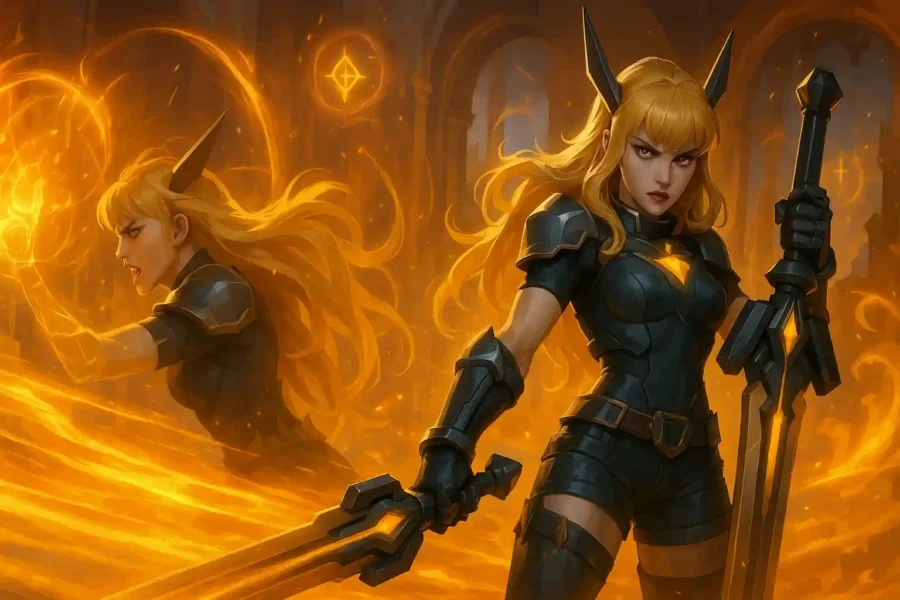
This build turns Magik into a durable melee combatant with immense area denial.
- Preparation: Invest all Trait points into the Red Trait Tree. Equip Mortal Will, which disables the ultimate in exchange for a powerful permanent boost to health and damage.
- Blessing Strategy:
- Red Cards: Prioritize blessings that increase Attack Range (Soul Domain) and Normal Form Soul Sword Damage. Mark Detonation and Soul Surge are strong secondary picks.
- Purple Cards: Stacking Vampiric Vitality is essential for Magik. Aim to secure several stacks and reach a comfortable HP total before the Wave 10 boss fight.
Thor Build — A-Tier Ranged (Blue Tree, Endstorm)
This build is highly dependent on a specific blessing to transform Thor into a relentless ranged artillery cannon.
- Preparation: Invest all Trait points into the Blue Trait Tree. Equip Concussive Cell for a stunning effect on his E ability.
- Blessing Strategy:
- Blue Cards: The entire build hinges on acquiring Endstorm before Wave 10. This blessing turns Mjolnir’s throw into a rapid-fire machine gun. Also critical are blessings for Awakening Rune Duration like Power Prolongation.
- Purple Cards: Thor has no blue damage-scaling blessings, so it is essential to stack Damage Dealt %. Acquiring two or three Vampiric Vitality blessings is also necessary.
Jeff Build — B-Tier DoT/Utility (Red Tree)
While considered the most challenging character for Nightmare IV, Jeff The Land Shark can succeed with a build focused on damage-over-time and attrition.
- Preparation: Invest all Trait points into the Red Trait Tree for Joyful Splash. Use Hazardous Depths for the ultimate, which serves as a critical escape tool.
- Blessing Strategy:
- Red Cards: Prioritize Joyful Splash Damage and Capacity. The cornerstone is Nashing Waters; acquire at least five stacks throughout the run for its crucial damage-over-time effect.
- Purple Cards: Vampiric Vitality is extremely important; aim for at least four stacks. Pick up early, high-value Maximum Health blessings.
Key Encounters & Boss Guide (Waves 4/10/20)

- Wave 4 (Pillar Defense): A mid-wave event where the team must defend a pillar from a sustained zombie assault, introducing shielded soldier zombies.
- Wave 10 (Scarlet Witch): A major survivability and damage check for all builds. Constant movement is key to avoid her stun bubbles, and you must break her floating crystals to reduce her damage.
- Final Boss: Wave 20 (Dual Bosses): On Nightmare IV, the final wave is a grueling encounter against two bosses. This can either be two Scarlet Witches or a combination of Zombie Namor and Scarlet Witch.
- Zombie Namor Mechanics: Namor is initially invulnerable. You must destroy the squid minions he summons to make him vulnerable. Crucial Bug Warning: Be careful not to kill Namor’s squids too quickly with high-damage AoE attacks (like Blade’s spin), as this can cause his shield to bug and become permanently invulnerable.
- Focus Fire: The most important rule is to have the entire team attack the same boss. Triggering the special phases of both bosses at once is a recipe for a wipe. Focus Wanda first when she appears with Namor.
- Damage Distribution: When facing two Wandas, attempt to damage both as equally as possible. This allows splash damage to be effective on both during their final phases.
- The Spawn Trap: When reviving, move away from the spawn point immediately. Wanda tends to focus her stun bubbles on player locations, and this area can quickly become a stun-locked deathtrap.
Marvel Rivals’ Zombie Mode rewards both mechanical precision and long-term build investment. With the right blessing combinations, meta specializations, and awareness of boss mechanics, even Nightmare IV becomes a consistent clear.

Nightmare IV Quick Checklist

- Preparation is Key: Always purchase Revive Tokens before a run, but conserve them for the final boss waves (15-20).
- Hyper-Specialize: Funnel all Trait points into a single tree (usually Red) and ignore your abilities in favor of your primary attack’s damage.
- Smart Spending: Never waste Moon Power on the “random” blessing. Aggressively reroll the shop to find the specific meta blessings your build requires.
- Blade’s First Rule: If playing Blade, your first action upon spawning or reviving must be to reactivate Bloodline Awakening.
- Survive the Burst: Prioritize reaching the ~12,000 HP benchmark before the final boss to avoid being one-shot by their powerful attacks.
- Boss Fight Discipline: In dual-boss fights, always focus fire on the same target as your team. When reviving, immediately move out of the spawn area to avoid the “spawn trap.”

Epiccarry: best wow boost and coaching services
Frequently Asked Questions
What is Marvel Rivals’ Zombie Mode?
Marvel Rivals’ Zombie Mode is a limited-time wave-based PvE survival event where up to four players fight against hordes of undead enemies, mini-bosses, and two major bosses — Zombie Namor and Scarlet Witch, the Queen of the Dead.
The mode features progressive difficulty levels, permanent hero upgrades (Traits), and in-match power-ups called Blessings, making it both replayable and highly strategic.
How do I unlock Marvel Zombies Mode in Marvel Rivals?
You can unlock Marvel Zombies Mode through the Seasonal Event tab in the game’s main menu. Once available, you can join solo or team lobbies to start earning rewards. Players must complete an initial tutorial match to unlock all difficulty tiers and access permanent progression rewards.
Which heroes are available in Marvel Zombies Mode?
The playable roster is limited to five heroes: Blade, Magik, The Punisher, Thor, and Jeff the Land Shark.
Each hero has unique playstyles — Blade focuses on life steal and melee damage, Punisher excels in ranged firepower, Magik controls crowds through her Soul Sword, Thor delivers devastating AOE lightning, and Jeff adds utility and mobility to the team.
What is the best build for Marvel Zombies Mode?
The current meta build is Blade’s Red Trait Tree setup, designed around high attack speed, life steal, and relentless AOE damage. Core blessings include On the Hunt, Swift Edge, and Sweeping Edge. For survivability, Moonlight’s Protection and Vampiric Vitality are must-haves.
Punisher’s headshot-focused build is also top-tier for ranged players seeking consistent scaling.
What are the difficulty levels in Marvel Rivals Zombie Mode?
There are seven difficulty levels: Normal, Hard, Extreme, Nightmare I, II, III, and IV. Each tier significantly boosts enemy health, aggression, and damage output.
Higher difficulties also yield faster progression rates and access to rare blessings and cosmetic rewards. Nightmare IV is considered the true endgame where full meta builds are required.
What are blessings in Marvel Zombies Mode?
Blessings are temporary power-up cards purchased using Moon Power, a resource earned between waves. They modify your hero’s stats, abilities, or attack effects — such as adding Chain Lightning, Explosive Shots, or Frozen Explosion mechanics.
Blessings are essential for scaling through tougher waves and can completely change how a hero plays during a run.
How does life steal work in Marvel Zombies Mode?
Life steal converts a portion of your dealt damage into healing. It’s one of the most valuable survival mechanics in Nightmare difficulties, especially for melee heroes like Blade and Magik.
Stacking multiple life steal blessings allows players to out-heal chip damage from hordes and survive powerful boss phases without relying solely on healing items.
What is the “Frozen Enemies Explode” mechanic?
The Frozen Enemies Explode blessing makes frozen enemies detonate upon death, dealing massive AOE and blast damage to nearby zombies.
This mechanic is crucial for crowd control in later waves, where tight groups of enemies can quickly overrun your team. Combining it with Chain Lightning or Area Damage blessings maximizes its destructive potential.
What are the best S-Tier heroes in Marvel Zombies Mode?
As of the 2025 meta, Blade and The Punisher are ranked S-Tier due to their unmatched damage scaling and survivability.
Blade dominates melee combat with life steal and constant AOE, while Punisher delivers exceptional ranged burst with Single Bullet Damage and Headshot Multipliers.
Magik and Thor sit in the A-Tier, excelling in hybrid damage and crowd control roles.
How does the Trait system work in Marvel Rivals Zombie Mode?
Traits are permanent stat trees unique to each hero. They come in color-coded categories — Red (Offense), Blue (Utility), and others — allowing players to specialize their builds.
Trait points are earned through gameplay and can be reallocated freely. Optimizing Trait trees around your preferred playstyle (e.g., Red for DPS, Blue for durability) is key to surviving higher-tier waves.
What is the best strategy for early game in Marvel Zombies?
During the early waves, prioritize survivability and consistent damage over raw power.
Buy affordable blessings like Moonlight’s Protection and Vampiric Vitality, and avoid random rerolls until you’ve secured basic sustain tools.
Use primary attacks rather than ultimates, as most abilities don’t scale with blessings — conserving energy and focusing on scaling damage output ensures smoother progression.
How do you deal with bosses in Marvel Zombies Mode?
Boss fights require precise team coordination.
For Zombie Namor, focus on destroying his summoned squid minions to break his invulnerability shield.
Against Scarlet Witch, stay mobile to avoid her stun bubbles and destroy her floating crystals to reduce her attack power.
On Wave 20 (dual bosses), target one boss at a time to prevent overlapping mechanics and avoid team wipes.
How can I increase AOE and explosion damage?
AOE (Area of Effect) and explosion damage can be enhanced by stacking specific blessings such as Blast Radius, Explosion Impact, or Chain Reaction.
These upgrades are particularly strong on heroes with wide attack patterns like Blade and Magik. Pairing AOE with Frozen Explosion creates chain detonations that can clear entire zombie clusters in seconds.
What’s the difference between Normal and Nightmare difficulty?
Normal difficulty is intended for learning mechanics and experimenting with builds. Enemies are slower, weaker, and less aggressive.
In contrast, Nightmare I–IV increases the enemy count, damage, and boss modifiers exponentially.
Nightmare IV requires optimized gear, near-perfect blessing selection, and precise teamwork — it’s designed as the ultimate PvE challenge.
How does Chain Lightning work in Marvel Zombies Mode?
Chain Lightning blessings cause your attacks to jump between enemies, hitting multiple targets per strike.
This effect scales with attack speed, making it exceptionally powerful for Blade and Thor. It synergizes with Attack Range and Damage % modifiers, amplifying total DPS output across clustered zombie waves.
How do I improve my reload speed in Marvel Zombies Mode?
To improve reload speed, assign Trait points in the Red Tree and seek blessings that specifically enhance Reload Efficiency or Rate of Fire.
This is vital for The Punisher, whose damage output depends on sustained fire. Combining reload speed buffs with Headshot Damage blessings results in near-continuous DPS uptime.
Can you play Marvel Zombies Mode solo?
Yes — solo play is fully supported and scales enemy health slightly for balance.
However, soloing Nightmare III–IV requires near-perfect builds with heavy life steal and self-healing focus. Without teammates to revive you or draw aggro, positioning and Blessing optimization become far more critical.
How does self-healing differ from life steal?
Self-healing refers to passive health regeneration that restores HP gradually, while life steal provides instant healing based on dealt damage.
Both systems stack, and combining them greatly increases sustain. Heroes like Blade and Magik benefit the most, as their melee attacks trigger both healing types simultaneously.
What happens if the whole team dies in Marvel Zombies Mode?
If all players are defeated, the run resets to Wave 1. Progress toward permanent Traits is retained, but in-run rewards are lost.
To prevent wipes, purchase Revive Tokens from the in-game shop before each run. These allow fallen teammates to return during crucial boss phases.
What rewards can I earn from Marvel Rivals Zombie Mode?
Players earn Trait XP, upgrade materials, cosmetics, and limited-time event rewards.
Higher difficulties grant exclusive Halloween-themed skins, sprays, and nameplates.
Completing Nightmare IV also awards unique profile badges and premium materials for long-term progression across other game modes.