Deep Rock Galactic: Rogue Core is taking the familiar co-op mining chaos of DRG and turning it into a far more aggressive roguelite experience. While the game still shares the same universe and signature style as the original, Ghost Ship Games is completely changing how progression, teamwork, combat pacing, and survival work deep beneath Hoxxes IV. Between randomized builds, escalating enemy pressure, new Reclaimer classes, and run-based progression systems, Rogue Core looks dramatically different from standard Deep Rock Galactic missions.
In this guide, we’ll cover:
- How Rogue Core’s roguelite progression system works
- The Greyout Barrier and why players start with limited gear
- All confirmed Reclaimer classes and their abilities
- The Negotiation System and shared team upgrades
- Corespawn enemies, Core Agitation, and Red Zone escalation
- Expenite, workbenches, Bioboosters, and progression systems
- Rift Gates, mission structure, and replayability mechanics
- Solo play, co-op systems, and team synergy
- Operation Rogue Core event details and rewards
- Everything currently confirmed before Early Access launch
Why Loadouts Reset in Rogue Core
Before getting into mechanics, it helps to understand why Rogue Core works the way it does at a systems level — and the answer is the Greyout Barrier.
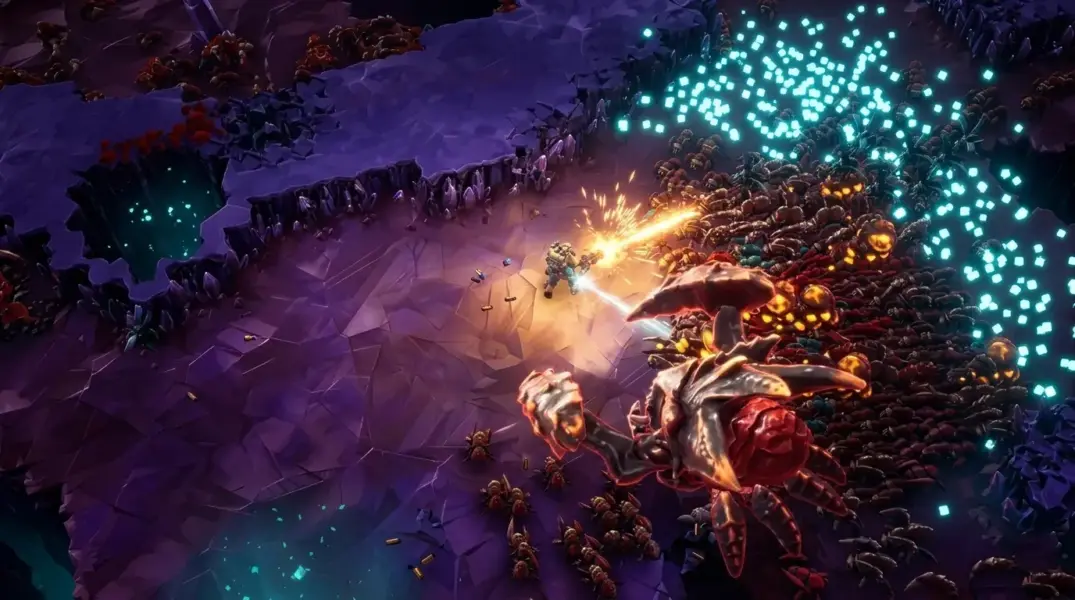
A massive electromagnetic field surrounds the deepest mining facilities on Hoxxes IV — what Ghost Ship calls an “enormous transient disturbance” in the official lore — severely limiting the technology that can pass through it. Because of this, Reclaimers deploy with only basic gear at the start of every run. Bringing in pre-loaded loadouts or advanced equipment from the outside is not possible. Everything useful has to be salvaged from the infested facilities themselves, which is why the mining sites need to be made secured and operational from the inside out.
This is not just worldbuilding flavor. It is the narrative reason the roguelite structure exists, and it makes the progression feel grounded rather than arbitrary.
How Rogue Core’s Roguelite Progression Works
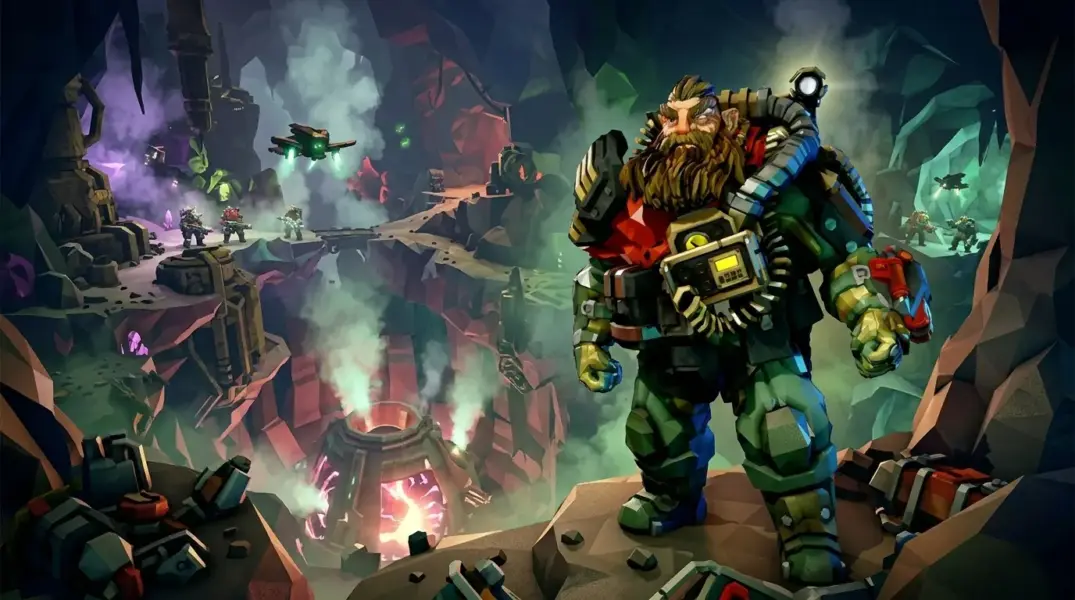
The most significant departure from the original is the move away from pre-mission loadout planning. In standard DRG, success is often built before the drop pod lands — refined builds, unlocked overclocks, carefully selected perks. The roguelite throws that out entirely.
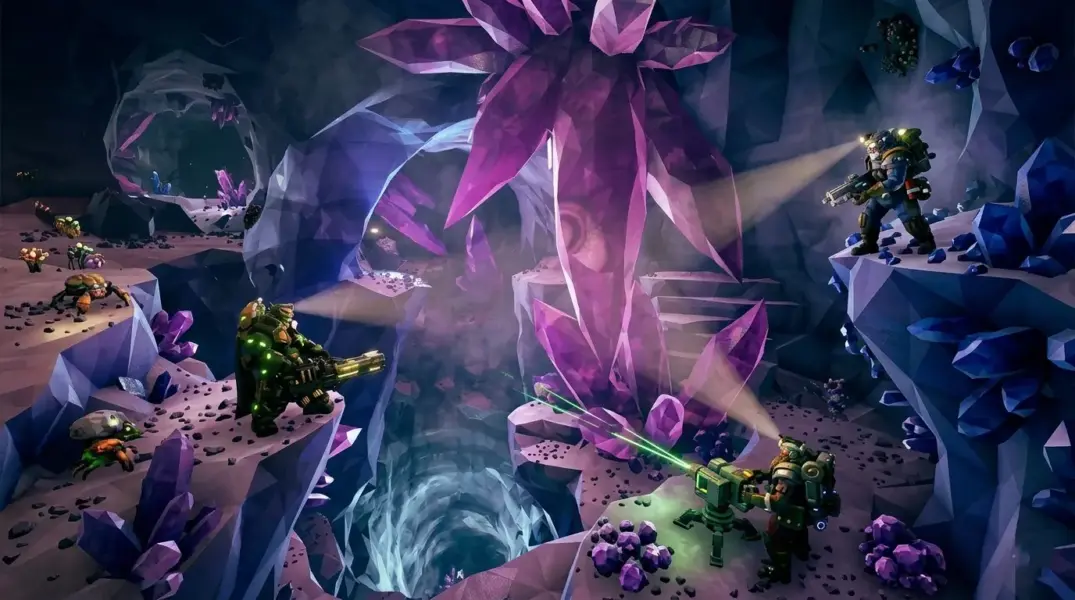
Players descend floor by floor through procedurally generated mining facilities, collecting weapons, upgrades, and tactical gear as they go. Each run starts from scratch. The build a squad finishes with will look nothing like the one they started with, and the shape of that build is largely determined by what each individual run offers.
Runs can snowball quickly. Elemental synergies, stacked buffs, and rare weapon combinations can push a squad from barely surviving to absurdly overpowered within a few floors. A bad draw can leave a team scrambling for the exit. Procedurally generated cave layouts, combined with randomized upgrades and escalating enemy pressure, create a strong replayability loop — no two runs play out the same way.
Weapon Rarity, Builds, and Upgrades in Rogue Core
Weapons in Rogue Core are scavenged during runs and arrive with randomized properties, rarity levels, and upgrade potential. Lower-rarity weapons can often receive additional modifications through Workbenches found throughout the facility. Higher-tier weapons tend to reach their power ceiling faster, but finding one early can shape the direction of an entire run.
This creates a constant risk-versus-reward loop. Squads must decide whether to invest Expenite into improving current weapons or push deeper into the facility gambling on stronger drops. Getting that decision right repeatedly is most of what separates good runs from failed ones.
Bioboosters and other environmental upgrades supplement the weapon pool with passive buffs and temporary enhancements. Environmental hazards can also be turned against enemies — elemental canisters containing fire, electricity, cryo compounds, and sludge are scattered throughout facilities and can be triggered against swarms. Careless use can wipe a squad as easily as it clears a room.
How Expenite and Ellis Work in Rogue Core
The primary mid-run currency is Expenite, processed through a robotic support assistant named Ellis, who functions as the squad’s mobile upgrade station during missions. Squads collect Expenite throughout each floor and use it to purchase temporary upgrades and power boosts on the move rather than arriving with them pre-equipped.
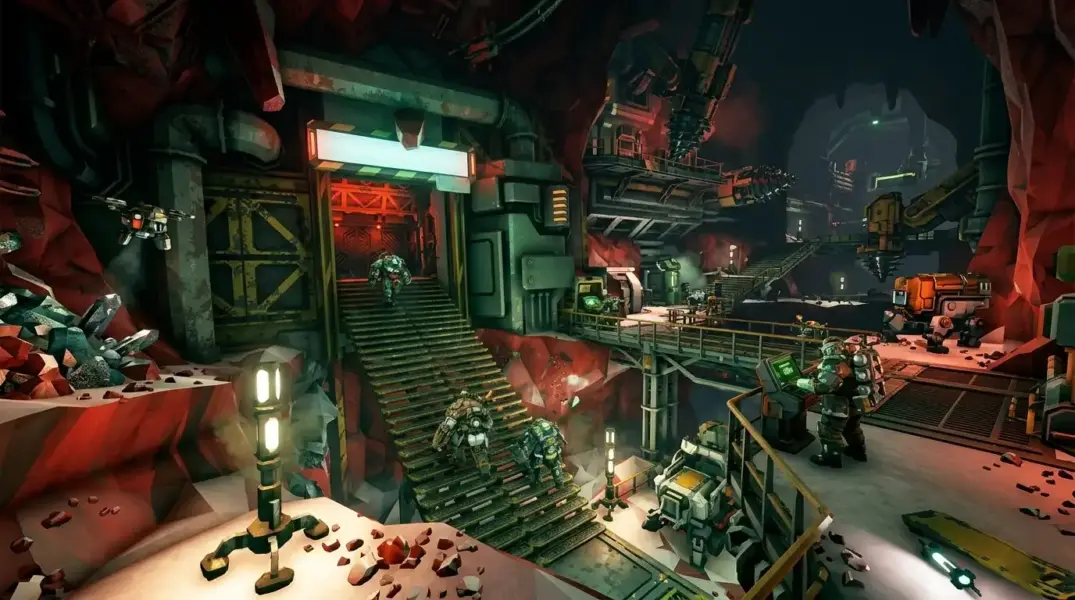
Workbenches scattered throughout facilities offer additional weapon modifications and passive buffs that can significantly shift a run’s momentum. Finding a strong workbench at the right moment often matters more than the weapons a squad starts a floor with.
All Confirmed Reclaimer Classes and Abilities
Rogue Core’s playable characters are called Reclaimers — an elite security force sent to investigate why deep-level excavations have gone dark. Five classes have been confirmed, and Ghost Ship Games has indicated more are planned throughout Early Access. Duplicate class selection is currently not allowed, which encourages squads to build genuinely varied compositions.
- The Guardian is a defensive frontline specialist. Seismic gloves stun enemies and control the pace of combat, making it the primary option for teams that want to dictate engagement range rather than react to it.
- The Spotter fills the support role, marking targets to allow teammates to deal bonus damage. Radar scans can reportedly detect hidden threats through walls, including Cave Leeches lurking on ceilings — the kind of detail that DRG veterans will find immediately familiar. Skilled Spotter players can also deploy spare ammo before the team uses a standard resupply pod, helping squads maximize total ammunition efficiency across longer runs.
- The Falconer handles crowd control through wide-area lightning attacks, controlling space through area denial rather than stunning. A drone companion allows the Falconer to perform remote revives, recovering downed teammates from a distance during chaotic engagements — one of the more distinct utility tools in the roster.
- The Slicer is built for high-intensity close-quarters melee combat. Melee cleave attacks reportedly avoid friendly fire, making it safe to operate inside crowded defensive positions. The class also appears capable of advanced movement techniques including “trimping” — using momentum and sloped terrain to launch across large caverns at high speed — which suggests a meaningful skill ceiling for movement-focused players.
- The Retcon absorbs damage to fill a rage meter that doubles damage output once fully charged. Its time-reversal ability can transport carried resources and heavy objects back to earlier positions, creating opportunities for aggressive resource recovery during difficult floors. It rewards standing in the fire rather than avoiding it, which makes it the highest-commitment class in the roster.
The Negotiation System and Team Synergy
Individual class roles in Rogue Core are less rigid than in the original, but team coordination matters considerably more — and the Negotiation System is the reason why.
During runs, players draw upgrades from a communal pool rather than receiving entirely separate rewards. Taking certain upgrades can interfere with a teammate’s build synergies, and some perks are clearly more effective on specific classes. Upgrades can also be queued rather than selected immediately, giving squads time to regroup and discuss build priorities before committing to powerful synergies. Health reward options are an exception — those are not shared, meaning multiple players can select them without removing the choice from teammates.
Squads that actively coordinate upgrade picks will outperform those that grab whatever looks strongest individually. The game appears designed specifically to punish that approach.
Corespawn Enemies, Core Agitation, and the Red Zone
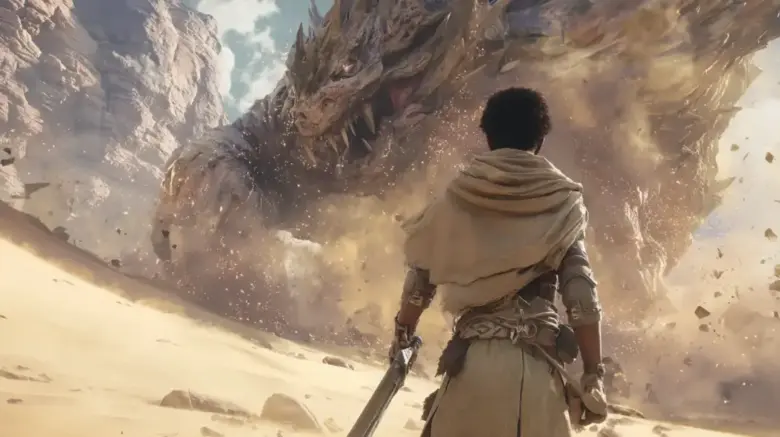
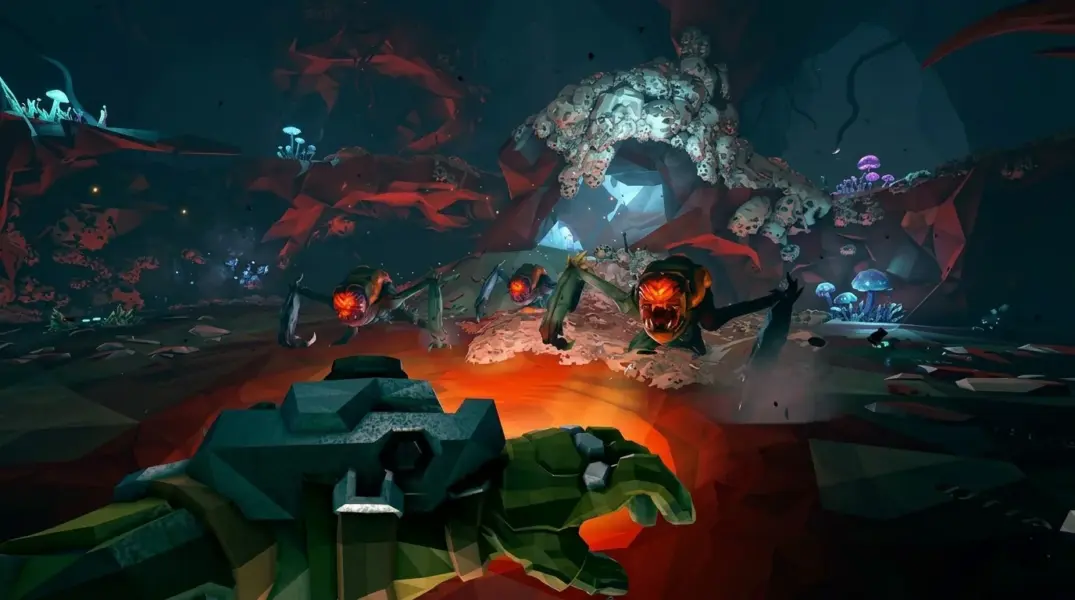
The primary antagonist faction is the Corespawn, a species living near the planet’s core. They look significantly different from Glyphids — more corrupted, more humanoid, and built around relentless pressure rather than swarming patience.
Core Agitation is the mechanic most likely to define Rogue Core’s identity. As a run progresses, the team’s presence destabilizes the core, and enemies become more numerous and more dangerous the longer a squad stays on any given floor. Once a run enters the Red Zone, effectively endless enemy waves begin spawning to force players deeper into the facility.
At this stage, Cosmic Nightmare Tentacles can emerge — massive, invulnerable entities capable of dragging players beneath the terrain and temporarily removing them from the run. The mechanic exists specifically to punish overly cautious playstyles. If squads fail to reach the elevator before late-stage escalation overwhelms a floor, stranded players may begin the next stage trapped inside hostile cocoons, forcing teammates to rescue them before the run can stabilize.
Rogue Core clearly wants players moving constantly.
In standard DRG, thorough exploration is rewarded. Here, lingering is punished. Every run ultimately leads to a Rift Gate — a massive portal connected to the Corespawn infestation — where squads face concentrated resistance that serves as the end-of-run boss encounter.
Progression: What Resets and What Carries Over
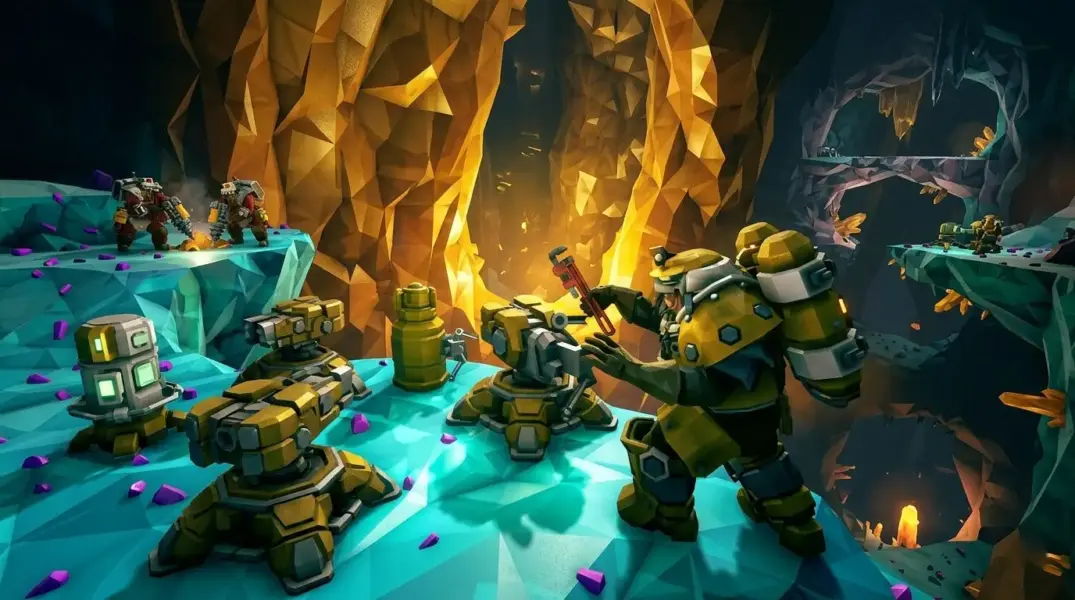
Most weapons and upgrades gathered during a run reset when it ends. That is the nature of the structure, and the Greyout Barrier provides the in-world justification for it.
Between missions, players return to the RV-09 Ramrod, a central hub ship that handles loadouts, cosmetics, statistics, and long-term class development. Permanent unlocks and access level progression carry across runs regardless of whether a mission succeeds or fails. The goal, according to Ghost Ship Games, is that players consistently feel advancement even after a run goes badly.
These systems are still evolving throughout Early Access.
Solo Play
Rogue Core is built around co-op, but solo deployments are supported. The game appears balanced around flexible team sizes rather than strict four-player requirements. Solo players should expect significantly steeper difficulty — Core Agitation and the Negotiation System are both designed with coordinated squads in mind, and neither is too forgiving with fewer players.
How Rogue Core Differs From Deep Rock Galactic
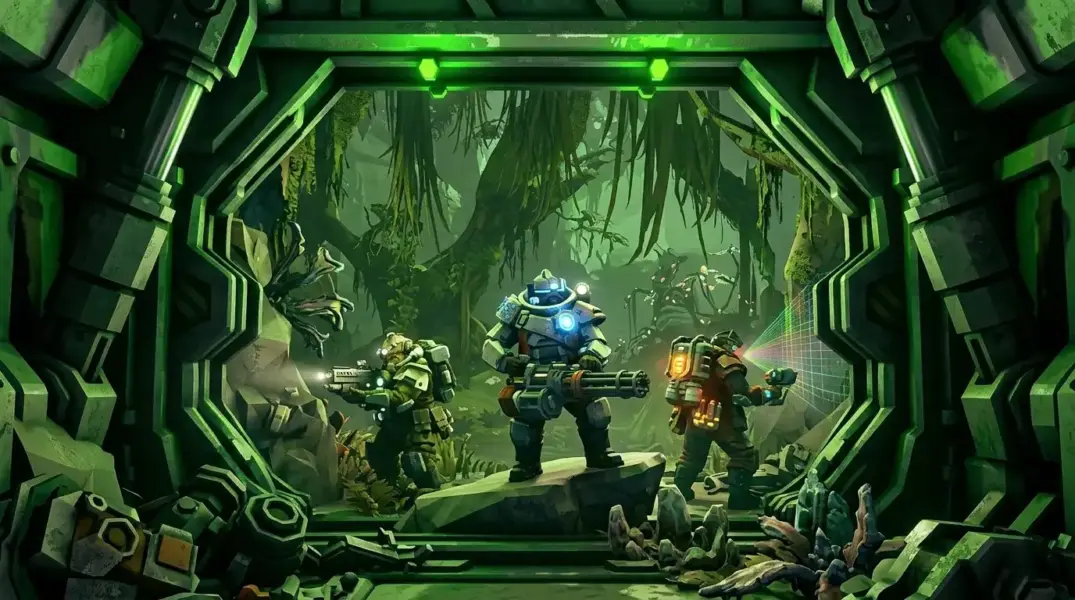
The spinoff started development as an expansion. The scale of the combat rebalancing and the introduction of infinite enemy swarms eventually made that impossible, and it became a standalone release. The two games now ask fundamentally different things from players.
Standard DRG rewards methodical preparation and consistent execution. Rogue Core rewards fast decision-making, adaptability, and momentum. Teams are under constant pressure and are expected to stay mobile. The Core Agitation system alone would break the original game’s balance if retrofitted into it — as a standalone title, the roguelite can lean fully into that punishing, escalating design without those constraints.
Deep Rock Galactic Operation Rogue Core Event Explained
Ghost Ship Games added a limited-time crossover event to the original Deep Rock Galactic ahead of the Rogue Core launch. Called Operation Rogue Core, it functions as a narrative bridge between the two games.
The event storyline frames a massive electromagnetic disturbance beneath Hoxxes IV that has disabled mining operations and cut off communication with several facilities. Standard DRG crews are authorized to assist the Reclaimers in containing the situation before the corruption spreads further.
The event launched on PC via Steam on May 6 and runs until July 9. Console versions are expected to follow roughly two weeks later, pending certification. It includes a four-mission assignment chain built around closing Core Rifts appearing across Hoxxes IV.
A new mission modifier called Core Corruption accompanies the event. When active, missions feature larger numbers of aggressive Corespawn enemies, greater Core Stone objectives embedded in massive craters, and distorted terrain with corrupted environmental effects visually distinct from previous threats like the Rockpox infection.
Completing the full assignment rewards the Standard Issue Reclaimer Combat Pickaxe cosmetic set — a limited-time exclusive tied to the launch window, with multiple customizable components compatible with the existing cosmetic system.
Everything Confirmed for Rogue Core Early Access
Deep Rock Galactic: Rogue Core enters Early Access on PC on May 20, 2026. According to Ghost Ship Games, the game is expected to remain in Early Access for roughly 18 to 24 months before reaching full release. The studio also plans to price the Early Access version below the eventual 1.0 launch.
The road to launch has already included multiple waves of Closed Alpha testing. Ghost Ship has been running regular playtests, issuing incremental updates, and gradually expanding player access — with Closed Alpha Update 06 releasing last month alongside another round of invitations.
Community feedback is expected to play a major role throughout development. The developers have repeatedly stated that balancing, progression systems, class tuning, and future gameplay additions will evolve heavily during Early Access, with the official Discord server acting as the primary feedback hub.
Currently confirmed Early Access plans include:
- Additional Reclaimer classes
- New progression systems
- More weapons and upgrades
- Ongoing balance changes
- Expanded gameplay content and mission variety
- Continued roguelite system iteration
No console release date has been announced yet.
Players who want an early look at the Corespawn faction and Rogue Core’s environmental hazards can already experience parts of that atmosphere through the ongoing Operation Rogue Core event in the original Deep Rock Galactic. The limited-time crossover event remains active until July 9.

Frequently Asked Questions
What are the main differences between Rogue Core and Deep Rock Galactic?
The biggest difference is pacing and progression. Standard DRG rewards careful exploration and permanent loadouts, while Rogue Core emphasizes randomized builds, escalating enemy pressure, faster combat, and run-based progression. Rogue Core also introduces entirely new Reclaimer classes, the Negotiation System, and Core Agitation mechanics.
Can you play Rogue Core solo?
Yes. Rogue Core supports solo play, although the game appears heavily designed around co-op teamwork and coordinated class synergy. Solo players will likely need to manage resources and escalation pressure much more carefully.
Will Rogue Core support co-op multiplayer?
Yes. Rogue Core is built around four-player cooperative gameplay similar to the original Deep Rock Galactic. Team coordination plays an even larger role due to shared upgrades, escalating enemy swarms, and specialized class abilities.
What are the Reclaimer classes in Rogue Core?
Rogue Core currently features five confirmed Reclaimer classes:
- Guardian
- Spotter
- Falconer
- Slicer
- Ret-Con
Each class introduces unique abilities, movement tools, support mechanics, and combat roles designed around roguelite build experimentation and team synergy.
What are Core Spawn enemies in Rogue Core?
Core Spawn are the primary enemy faction living near the core of Hoxxes IV. Unlike traditional Glyphids, they appear heavily corrupted and increasingly aggressive. Many missions revolve around surviving escalating Core Spawn pressure as Core Agitation intensifies over time.
How does the Negotiation System work in Rogue Core?
The Negotiation System is Rogue Core’s shared team upgrade mechanic. Instead of each player receiving completely separate rewards, squads draw upgrades from a communal pool. This forces teams to coordinate build choices carefully since one player taking an upgrade can remove it from the rest of the squad.
What is the Grayout Barrier in Rogue Core?
The Grayout Barrier is a massive electromagnetic phenomenon surrounding the deepest facilities on Hoxxes IV. It disrupts advanced technology and prevents Reclaimers from bringing most equipment into missions, which explains why players begin runs with minimal gear and must salvage upgrades during operations.
Will Rogue Core release on consoles?
No console release date has been announced yet. Rogue Core is currently planned to launch in Early Access on PC first.