The Elder Scrolls Online in 2026 is not the same game it was two years ago. With annual paid expansions gone, a new seasonal content model in place, and sweeping system overhauls across the board, ESO is more accessible than it has ever been — but also more confusing to navigate if you haven’t been paying attention.
Whether you’re brand new to Tamriel or a veteran who shelved their character sometime around 2022, this guide covers everything you need to make a smart decision before you log in.
In This Guide, We’ll Cover:
- What changed in ESO’s 2026 seasonal model and why it matters
- Whether ESO is actually worth playing right now (honest answer)
- What you actually do in ESO — including all the new activity types
- New story content and narrative highlights
- The new beginner experience and how leveling has changed
- Returning player tools like Hero’s Return and Golden Pursuit
- New difficulty options, endgame updates, and what’s coming next
- A direct comparison of the new vs. returning player path
Is ESO Worth Playing in 2026?
Let’s answer the question you actually came here with.
Yes — but with conditions. ESO in 2026 has made real strides in accessibility and removed some of the biggest barriers that drove players away. The removal of paid annual chapters means you won’t open the game and immediately hit a paywall for the latest content. Legacy DLCs, including Dark Brotherhood, Orsinium, Thieves Guild, and The Imperial City, are now included with the base game. That’s a meaningful change. So there’s a ton of previous and new content to work through, and it’s pretty easy to get started even if you’re playing solo.
- On the fun side: the world is enormous, the writing is consistently better than it gets credit for, and you can genuinely play at your own pace for hundreds of hours before touching group content.
- The caveats: some legacy issues haven’t been fixed. The shared open world still causes frustrating moments where quest bosses get killed by other players before you engage them. The new challenge difficulty system, while a great idea, has layering conflicts where players on lower difficulty can disrupt high-difficulty encounters. And while gear rewards scale somewhat with difficulty, the time investment doesn’t always feel proportional.
Here’s the honest breakdown:
| Verdict | Who it’s for |
| Strong yes | Story fans, solo explorers, RPG builders, casual MMO players |
| Conditional yes | Returning players who want to catch up without grinding history |
| Probably not | Players who demand polished endgame balance or competitive PvP parity |
| Strong no | People who bounce off slow onboarding or don’t enjoy open-world MMOs |
Time commitment to reach endgame: realistically 80-150 hours to hit CP160 gear cap as a new player, depending on how much side content you engage with. The game does not rush you, which is either a feature or a problem depending on your temperament.
What Changed in ESO in 2026 (And Why It Matters)
The biggest structural change to ESO in 2026 is the move from annual paid chapters to a seasonal content model. Here’s what that means in practice.
Previously, major zones and questlines were locked behind expansion purchases. In 2026, all future content updates will be free as part of the base game. You buy ESO once — or subscribe via ESO Plus — and you get everything that releases going forward, with the exception of premium Tamriel Tomes options and ESO Plus additions.
To replace the revenue from chapter sales, ZeniMax introduced the Tamriel Tomes system: a battle pass with free and paid tiers, both offering rewards as you play. Progressing earns Trade Bars, a currency you can spend at the Gold Coast Bazaar — a new in-game storefront that rotates previously released collectibles and cosmetics, creating a gameplay-driven alternative to the Crown Store. Progression is driven by weekly and seasonal challenges, which can be rerolled and completed at your own pace.
| System | What it is | Cost |
| Base game | All zones, quests, new seasonal content | One-time purchase |
| ESO Plus | All DLC zones/dungeons, Craft Bag, monthly crowns, Tomes acceleration | Monthly subscription |
| Tamriel Tomes (free tier) | Basic rewards, Trade Bars | Free with gameplay |
| Tamriel Tomes (paid tier) | Full cosmetics, skill styles, bonus rewards | Paid seasonal pass |
| Crown Store | Cosmetics, mounts, convenience items | Real money (crowns) |
The Craft Bag, accessible through ESO Plus, remains the single biggest quality-of-life upgrade in the game. It provides unlimited storage for all crafting materials, which solves one of the most annoying inventory management problems at any level. ESO Plus also accelerates Tamriel Tomes progression and grants credits toward unlocking premium reward tracks over time, making the subscription meaningfully more valuable than it was under the old chapter model.
How ESO Seasons Actually Work (2026 Explained)
- April 2, 2026 (Season Start): Tamriel Tomes, Gold Coast Bazaar, core system updates go live
- April 29 – June 17: Night Market event zone (limited-time, faction-based PvE content)
- June 8 (Update 50): Challenge Difficulty, PvP Veterancy, Class Mastery, major QoL updates
ESO now runs on 90-day seasons, delivering a mix of systems, events, and activities instead of one large yearly expansion.
One important distinction: ESO separates activities and systems. Activities — like event zones — may rotate in and out. Systems — like Tamriel Tomes or PvP progression — are permanent additions that stay in the game.
Instead of one expansion zone, 2026 focuses on multiple smaller content types throughout the year — seasonal events, new systems, and experimental activities — creating a more varied gameplay loop. The Night Market is the clearest example: a faction-based cooperative event space in Fargrave built around group encounters rather than exploration, with long-term rewards including a unique player home.
Seasons are also a testing ground for experimental design. Features like Rumors and Sage’s Vault wouldn’t have fit into the old expansion model. Not all content is permanent, and player response determines what stays — but that flexibility lets ESO evolve faster, even if it introduces some FOMO.
This reflects a broader shift in ESO’s design: less rigid progression, more exploration and player-driven pacing, with a focus on reducing grind and getting players into meaningful content faster.
What Do You Actually Do in ESO in 2026? (Real Gameplay Loop)
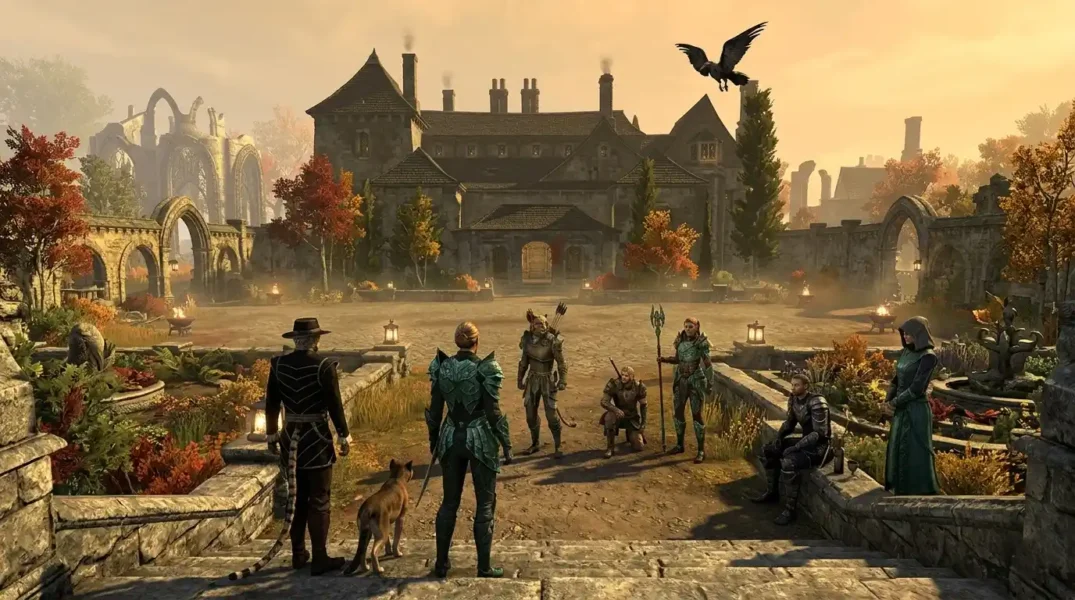
This is the question most guides bury under lore. Here’s a direct answer.
ESO is a sandbox MMO — there’s no single path, and most players rotate between activities. In 2026, those activities are more connected than ever: they don’t just fill time, they drive progression through rewards, gear, and long-term unlocks.
Core activities that have always existed:
- Zone Stories: The main stories in each region, fully voiced and story-driven. This is the backbone for most new players.
- Side Quests: Smaller narrative content scattered throughout the world, often better written than the main questlines.
- Daily Quests: Repeatable missions for steady rewards and progression currency.
- Group Dungeons: 4-player instanced content with Normal, Veteran, and Hard Mode tiers.
- Trials: 12-player raid-style endgame encounters, the competitive ceiling of PvE. New trials like Crimson Velt expand the roster in 2026, and encounters now include scalable difficulty beyond just bosses — even standard enemy groups can be tuned for higher rewards, pushing trials toward a more consistently demanding experience rather than a series of boss fights with filler between them.
- Infinite Archive: A rogue-like mode with scaling difficulty and temporary buffs, playable solo or with a partner.
New activity types introduced in 2026:
- Dynamic Encounters: Multi-stage world events that scale with player participation. These aren’t simple kill-X objectives — they involve defending NPCs, escorting targets, and rescuing animals across unfolding event sequences. The best ones feel like spontaneous quests that happen around you.
- Favors: Narrative-driven daily quests tied to specific characters or factions. Completing them progresses a story over time, rewarding unique collectibles tied to character storylines, making dailies feel less like a chore and more like an ongoing relationship with the world.
- Rumors: Exploration-based quests with no UI markers. You follow written clues, talk to NPCs, and solve mysteries using logic or — if you’re stuck — community help. For players who miss the Morrowind-era approach to quest design, this is a significant addition.
- Sage’s Vault: A 1-4 player activity focused on puzzles, traps, and stealth rather than combat. Each run features randomized room layouts with rare jackpot rooms offering high-value rewards. It fills a gap ESO has had for years — meaningful non-combat group content. Unlike most seasonal activities, Sage’s Vault is designed as a system-level addition, meaning it’s likely to persist and evolve rather than rotate out.
For PvP players, 2026 brought a proper Veteran PvP Reward Track tied to Alliance Points earned across Cyrodiil, Imperial City, and Battlegrounds. Seasonal rewards include titles, cosmetics, and skill styles, making PvP progression feel structured rather than a side activity with no clear goal. Ongoing Vengeance Tests are exploring damage caps and healing adjustments in large-scale combat, though those changes are still in flux.
New Story Content in 2026
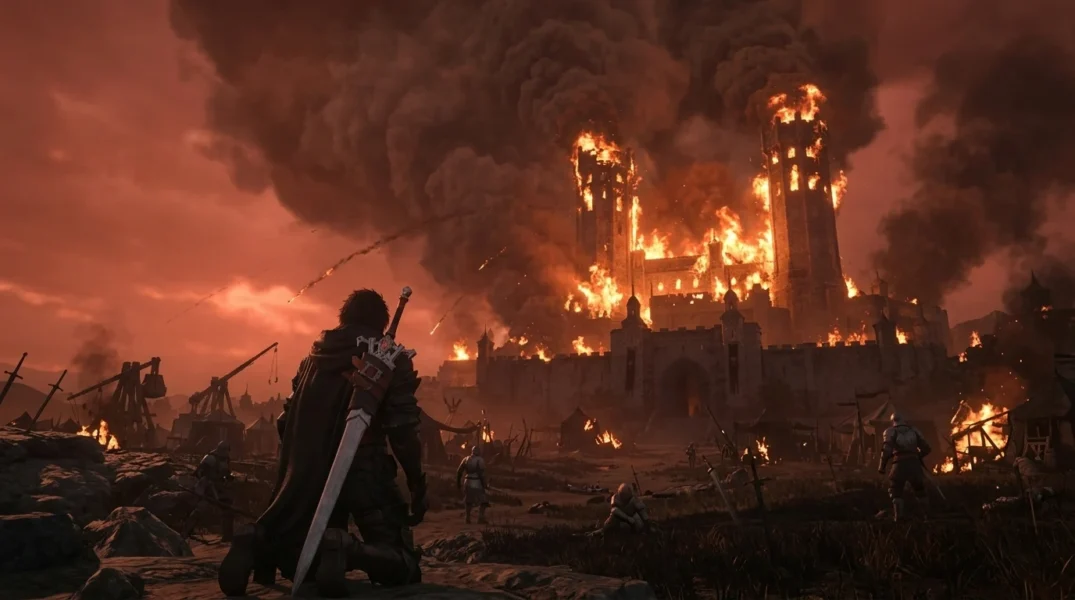
ESO has always had strong writing in its side content, but 2026 brings two standout narrative additions worth flagging specifically.
The Sheogorath questline is a standalone story following the Daedric Prince of Madness as he temporarily becomes mortal. It spans multiple regions, leans heavily into humor and absurd situations, and represents classic Elder Scrolls storytelling at its most self-aware. For longtime fans of the series, it’s one of the more memorable additions in recent memory.
The Thieves Guild expansion continues the existing storyline, shifting focus to a new region and expanding stealth-based gameplay with new environmental interactions for sneaking and evasion, additional tools for dealing with guards and NPCs, and a unique Mythic item that upgrades over time as you progress through the questline. That last detail matters — it makes the story content directly relevant to buildcrafting, not just a separate narrative track.
Both reflect ESO’s 2026 approach: smaller, focused storylines tied directly to systems.
How to Start ESO in 2026 (New Player Guide)
The ESO beginner experience in 2026 is genuinely the best it has been. A new character starts in the original Coldharbour tutorial, featuring the fan-favorite Cadwell, whose cheerful obliviousness to mortal peril sets the tone nicely. From there, the narrative flow is structured to introduce systems gradually rather than burying you in menus on day one.
Each level-up now triggers a clear pop-up explaining what you’ve unlocked and what to do next. Crafting gets introduced organically. Dungeons become available at level 10 with a proper explanation. Golden Pursuit isn’t just a tutorial layer — it’s now a core onboarding system that continues to guide both new and returning players through evolving seasonal content. The low-level version guides players under level 20 through core UI elements, offering free item rewards for each step completed, while the returning player version (discussed below) handles the full system reintroduction for veteran characters.
The original starting zones have received visual refreshes, with environmental detail brought closer to the fidelity of newer zones, so you’re not whiplashed between decade-old textures and modern content.
Combat fundamentals worth understanding early:
- Light attack weaving: hit a light attack before every ability to maximize DPS and generate Ultimate faster. This is not optional at higher difficulty.
- Blocking: reduces damage but drains Stamina. Learn when to use it, not just that it exists.
- Heavy attacks: restore resources — Magicka with staves, Stamina with melee or bows.
- Dodge rolling: grants brief invulnerability frames but becomes very expensive if you spam it.
- Resource focus: most builds specialize in either Magicka or Stamina, not both.
The Dragonknight class received a full audiovisual and mechanical refresh in 2026 — abilities, animations, VFX, and audio were all reworked, not just rebalanced. It sets the standard for future class updates and makes Dragonknight the most satisfying melee experience in the game right now. Two-handed weapons also received an auditory and visual pass that makes them feel appropriately brutal.
Returning to ESO in 2026? Start Here
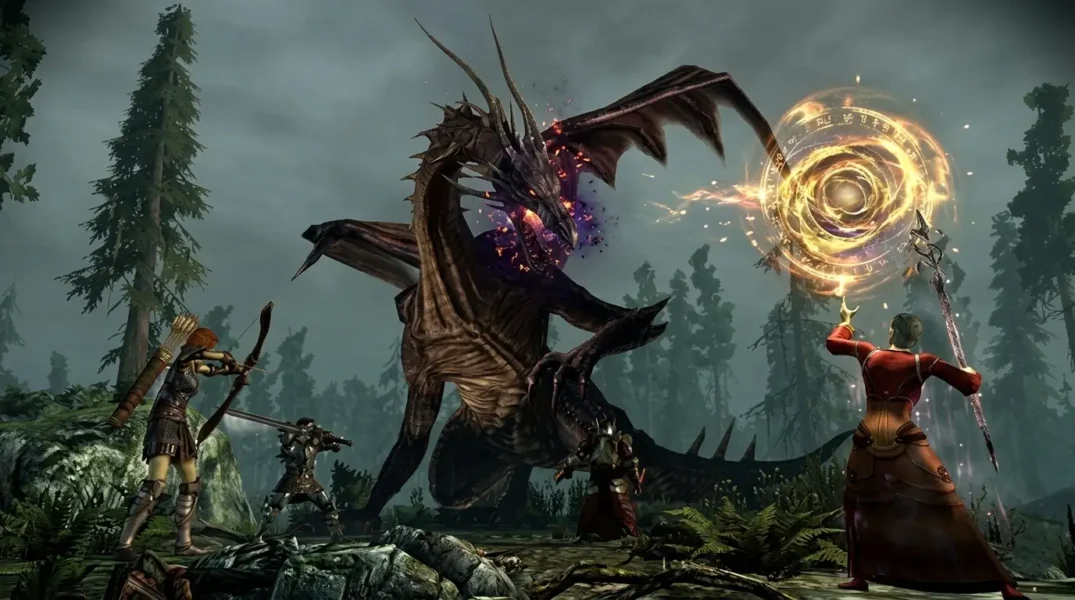
If you have a high-level character you haven’t touched in two or three years, the Hero’s Return dungeon is finally a proper solution to that problem. When you log into an old character, the game invites you into a 10-minute solo instance that reintroduces your class’s core mechanics — blocking, interrupting, heavy attacking — in a controlled environment where dying doesn’t matter. It’s brief and it actually works.
After that, the Golden Pursuit questline (found in the Activity Finder) walks you through the UI systems — zone guide, skills screen, inventory management — while rewarding you with useful items for each step. As noted above, Golden Pursuit is now a core onboarding system for both ends of the player spectrum, not just a one-time tutorial.
Which path is right for you:
| Player type | Recommended approach | Why |
| Brand new to ESO | Start a fresh character | Structured onboarding, better narrative flow |
| Returning after 1-2 years | Use Hero’s Return on existing character | Faster reintegration, keep your progress |
| Returning after 3+ years | Either path works | Hero’s Return handles complexity; fresh start avoids re-learning old habits |
| Casual / story-focused | New character | Seasonal model rewards regular play cycles |
| Endgame / hardcore | Returning character with Hero’s Return | Champion Points are account-wide; alts benefit immediately |
ESO Builds in 2026: How Progression Actually Works
ESO’s buildcrafting is one of its biggest strengths — and one of its steepest learning curves. Three systems define how builds work in 2026:
- Scribing lets you modify specific abilities called Grimoires — adjusting damage types, secondary effects, and buffs to suit your playstyle. This is particularly powerful for hybrid builds that need flexibility across content types.
- Subclassing lets you replace up to two of your class skill lines with those from other classes. Meta builds often pull the strongest abilities from multiple classes rather than sticking to a single identity. Subclass skills cost more to unlock but scale account-wide, so the investment pays off across all characters.
- Class Mastery is the newest addition, introduced specifically to address the problem that hybrid builds were outperforming pure class builds to the point where playing your original class felt like a handicap. Each class now has five Class Mastery passives; you choose two, they don’t cost skill points, and they’re designed to reward staying loyal to your class identity. In practice, this creates a meaningful strategic choice: do you maximize class identity with Mastery bonuses, or build a hybrid meta setup through Subclassing? Both are now genuinely competitive, which wasn’t true before this system existed. Note that Class Mastery is part of the June update, not available at season launch.
- Gear progression follows a clean structure: the effective cap is level 50 / Champion Point 160. Most builds use two 5-piece sets plus a 2-piece Monster Set. Mythic Items — obtained through the Antiquities system, and in some cases tied directly to specific questlines like the Thieves Guild expansion — sit at the top of the gear hierarchy. The Sticker Book system makes gear farming tolerable: once you collect an item, it’s saved permanently and can be reconstructed later using Transmute Crystals.
New Difficulty System in ESO (Is It Actually Challenging?)
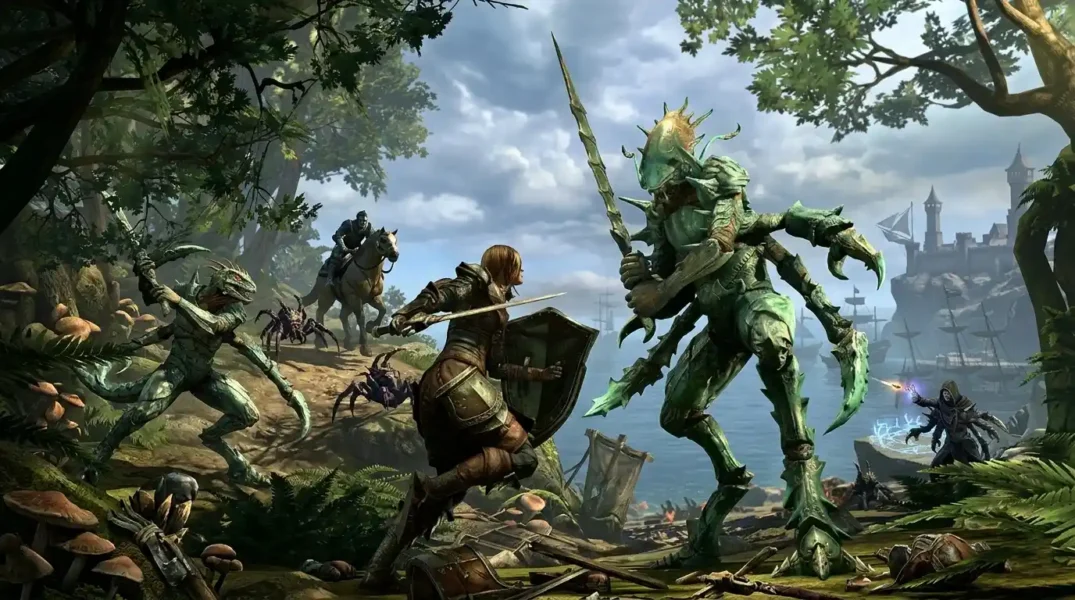
One of the most requested features in ESO’s history: making overland content actually challenging for high-level characters. This system arrives with the June update and delivers four distinct tiers. It’s player-specific — you can opt into a higher difficulty while other players in the same world remain on lower settings, which is what creates the shared-world conflicts mentioned earlier.
| Difficulty tier | What changes | Reward bonus |
| Adventurer | Default experience | Standard |
| Seasoned | Moderate damage increase / player damage decrease | Modest increase |
| Master | High challenge, optimized builds recommended | Meaningful increase |
| Vestige | Enemies deal up to 600% more damage, player output significantly reduced | Highest available |
The important caveat: reward scaling at higher difficulties is not always proportional to the time investment. Master and Vestige difficulty encounters take significantly longer, and the gold and XP gains don’t always fully reflect the effort. Both the reward balance and the shared-world layering conflict are known issues the developers are actively addressing.
Quality of Life Improvements in 2026
Alongside the major systems, Update 50 and the 2026 seasonal patches introduced a collection of smaller improvements that collectively make the game significantly more usable day-to-day:
- Faster Mount Progression: Mount training has been sped up, reducing one of the longest time-gated systems in the game.
- Easier Respec System: Skills and attributes can now be reset directly from the UI, removing the need to visit specific NPCs.
- Guild Mail: Guild leaders can now send announcements directly to all members.
- Transport Stations: Faster travel options added to major hubs, reducing the friction of getting around large zones.
- Motif Sourcing UI: The game now shows exactly where crafting style motifs drop, removing the need to consult external wikis for basic crafting information.
- Character Creation Timer: Extended to allow more time for customization without being rushed into the tutorial.
- Account-wide improvements: Additional account-wide outfit slots, back bar XP sharing, and further combat quality-of-life changes round out a substantial list of long-requested fixes.
None of these change the game on their own, but together they significantly improve day-to-day play.
ESO 2026 Roadmap: What’s Coming Next
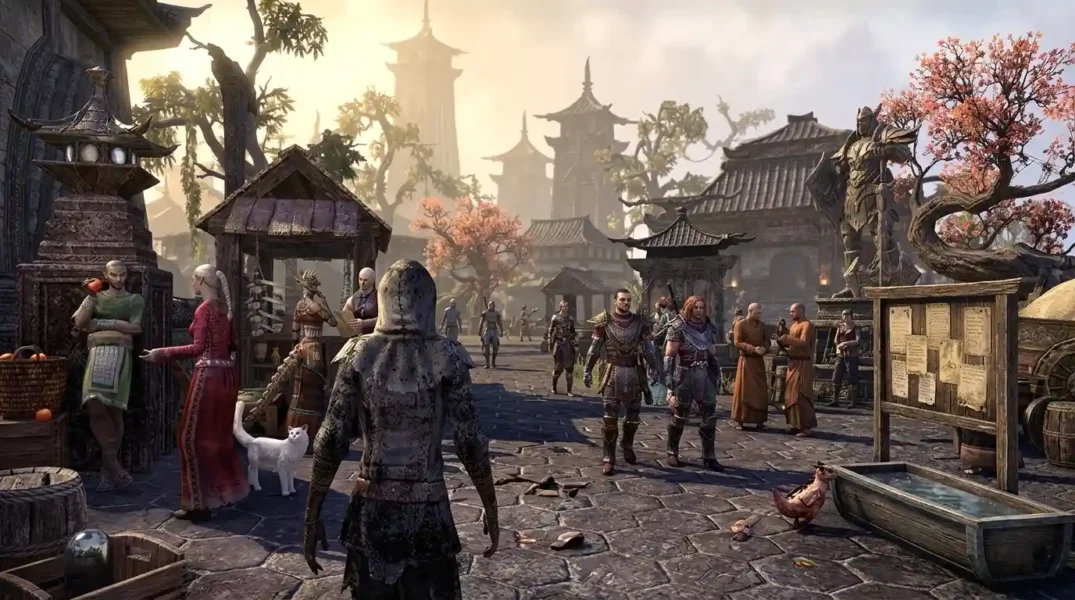
The 2026 and early 2027 roadmap includes several major features at various stages of development.
The Werewolf Refresh is a complete overhaul of the Werewolf skill line, which has been underperforming in modern content for years. Solo dungeon versions of existing group content are also in development, reworked for solo play with optional difficulty modifiers — a significant win for players who prefer not to group.
Naval Combat is one of the more ambitious upcoming additions: ship-based encounters with active combat mechanics, including cannon usage, combined with underwater exploration and combat that expands gameplay well beyond traditional land-based encounters. These features are being introduced as event-based systems rather than full open-world ship control, but the scope represents genuinely new territory for ESO. If the developers execute on it, it’s the kind of addition that changes how players think about the world itself.
Beyond that, the Skyrim Excursion — a return to the iconic snowy peaks with dynamic weather systems — is teased for early 2027, alongside crossplay and cross-progression also targeted for 2027.
Final Verdict: Should You Play ESO in 2026?
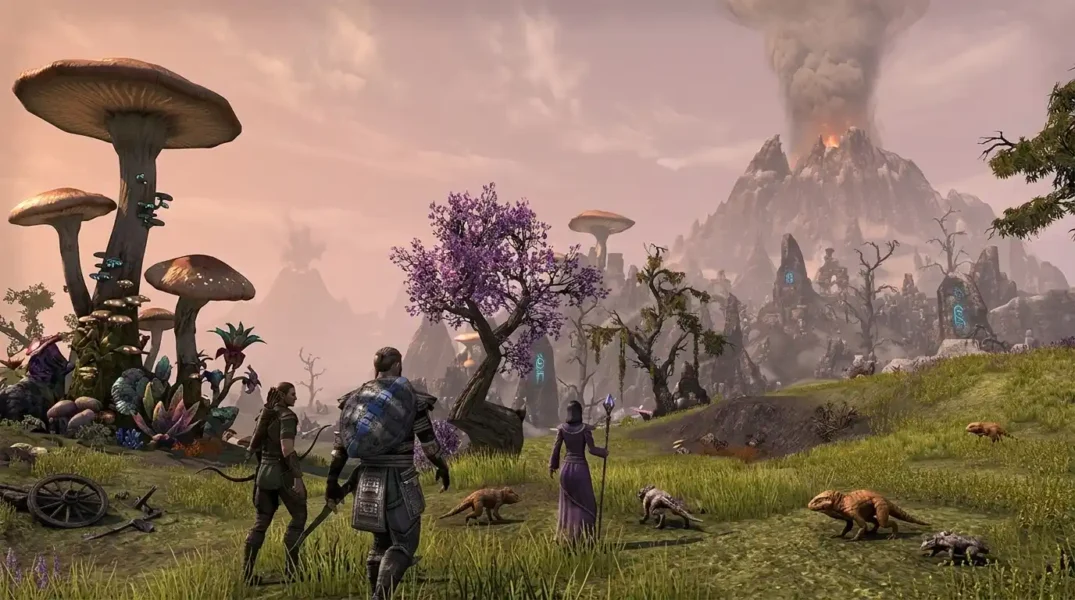
ESO in 2026 is a genuinely good entry point, but it rewards players who understand what kind of game it is. It is not a fast-paced, competitive MMO. It is a sprawling, largely solo-friendly RPG with MMO infrastructure underneath — and in 2026, that infrastructure is finally catching up with the quality of the content sitting on top of it.
The seasonal model removes the biggest financial barrier. Hero’s Return removes the biggest psychological barrier for returning players. The Challenge Difficulty system addresses the most common complaint from veteran solo players. Class Mastery makes pure class builds competitive again. The new activity types — Rumors, Dynamic Encounters, Sage’s Vault, Favors — give the world texture that static questing never could. And standout narrative additions like the Sheogorath questline prove the writing team hasn’t lost the thread of what makes an Elder Scrolls story worth following.
None of these systems are perfect in their current form. But the direction is right, and for an eleven-year-old MMO, the pace of meaningful change in 2026 is legitimately impressive. If you like open-world RPGs, deep buildcrafting, and can tolerate an MMO’s shared-world quirks, ESO in 2026 is worth your time.
All information current as of April 2026 / Update 50. Some system details may change with future patches.

Frequently Asked Questions
Is ESO worth playing in 2026?
Yes — ESO is absolutely worth playing in 2026. The new seasonal model removes paid expansions, adds constant updates, and improves the overall player experience, making it one of the most accessible versions of the game yet.
Is ESO free to play in 2026?
ESO is not fully free-to-play, but all new seasonal content is included with the base game. Older DLC can be accessed through ESO Plus or purchased separately.
What changed in ESO in 2026?
ESO moved from yearly expansions to a seasonal model, introduced Tamriel Tomes (battle pass), new activity types, Class Mastery, and major quality-of-life improvements.
What is the ESO seasonal model?
ESO now runs on 90-day seasons that deliver rotating activities, permanent systems, and ongoing rewards instead of one large yearly expansion.
What is Tamriel Tomes in ESO?
Tamriel Tomes is ESO’s battle pass system, offering free and paid reward tracks. Players complete weekly and seasonal challenges to earn rewards and Trade Bars.
What is the Gold Coast Bazaar?
The Gold Coast Bazaar is a new in-game store where players spend Trade Bars earned through Tamriel Tomes to unlock cosmetics and collectibles.
What is the Night Market event in ESO?
The Night Market is a limited-time event zone in Fargrave featuring faction-based gameplay, cooperative objectives, and long-term rewards like a unique player home.
What do you actually do in ESO in 2026?
Players rotate between main stories, side quests, dungeons, trials, and new activities like Dynamic Encounters, Rumors, and Sage’s Vault, all of which feed into progression.
What are the new activities in ESO 2026?
New activities include Dynamic Encounters, Favors, Rumors, Sage’s Vault, and seasonal event zones like the Night Market.
Is ESO beginner-friendly in 2026?
Yes — the new player experience has been significantly improved with better tutorials, guided progression through Golden Pursuit, and clearer system explanations.
How long does it take to reach endgame in ESO?
It typically takes 80–150 hours to reach the CP160 gear cap, depending on how much side content you complete.
What is the Hero’s Return system?
Hero’s Return is a short solo experience that helps returning players relearn core mechanics and systems before jumping back into the game.
What is Class Mastery in ESO?
Class Mastery is a system where players choose two passive bonuses to strengthen their class identity and compete with hybrid builds.
What is Scribing in ESO?
Scribing allows players to modify abilities by changing effects, damage types, and buffs, enabling deeper build customization.
What is Subclassing in ESO?
Subclassing lets players replace up to two class skill lines with abilities from other classes, enabling hybrid builds.
What is the ESO difficulty system?
The Challenge Difficulty system adds four tiers — Adventurer, Seasoned, Master, and Vestige — allowing players to scale overland difficulty for better rewards.
Is ESO pay to win in 2026?
No — ESO is not pay-to-win. Purchases mainly offer convenience, cosmetics, and progression boosts, not direct power advantages.
What is ESO Plus and is it worth it?
ESO Plus is a subscription that provides DLC access, a crafting bag, and bonuses. It’s worth it for regular players, especially for inventory management.
What’s coming next in ESO after 2026?
Upcoming features include naval combat, underwater exploration, solo dungeons, and a return to Skyrim, along with continued seasonal updates.
Can you play ESO solo in 2026?
Yes — ESO is highly solo-friendly. Most content, including main stories and many activities, can be completed without grouping.