Final Fantasy VII Revelation is the final chapter of the FFVII Remake trilogy, following the unresolved ending of Final Fantasy VII Rebirth and bringing Cloud’s party closer to Sephiroth, Meteor, the Weapons, and the truth behind the timeline changes. Before going into Part 3, it helps to understand the major lore threads from Remake, Rebirth, and the original FFVII.
In this guide, we’ll cover:
- What Final Fantasy VII Revelation is and when it launches
- Whether you need to play Remake, Rebirth, or the original FFVII first
- Where Rebirth leaves Cloud, Aerith, Zack, and the party
- Aerith’s fate, Holy, and the Lifestream explained
- Zack Fair and the timeline mystery
- Cloud’s false memories and the truth of Nibelheim
- Sephiroth, Jenova, the Black Materia, Meteor, and the Reunion
- What the Weapons are and why the Planet awakens them
- Why Wutai, Mideel, Rocket Town, Vincent, Cid, and the Highwind matter
- Known gameplay features and what is still unconfirmed
What Is Final Fantasy VII Revelation?
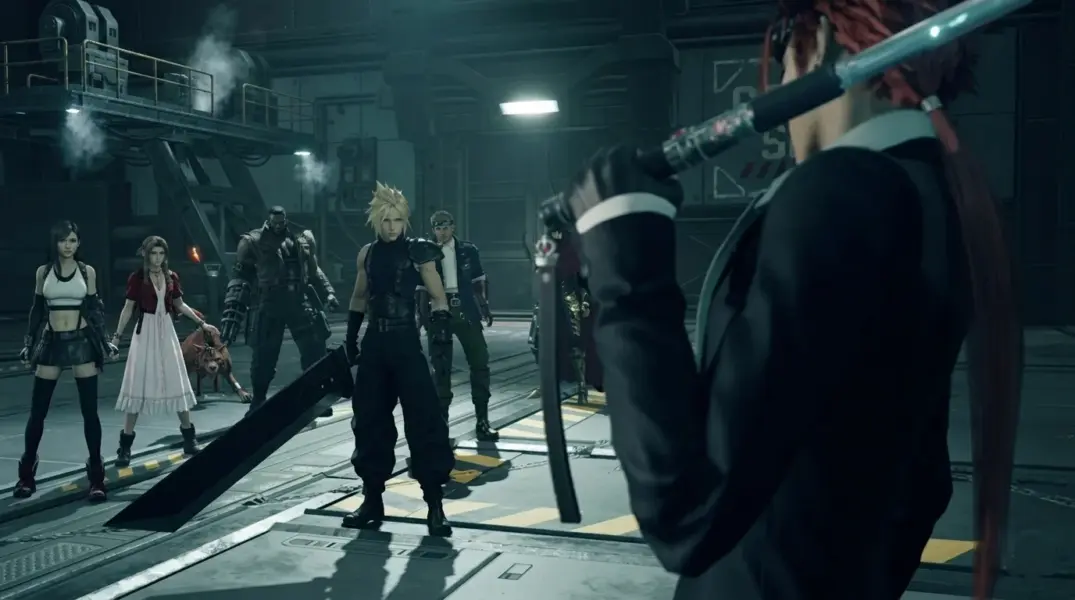
Revelation is the third and final chapter of the FFVII Remake trilogy, following 2020’s Remake and 2024’s Rebirth. Its central theme is resolve — Cloud and his companions must come to terms with who they are and what they’re fighting for before facing Sephiroth in one last confrontation. The subtitle fits: hidden truths finally surface, covering Cloud’s fractured identity, Zack’s role, Aerith’s fate, Sephiroth’s endgame, and the Planet’s response to Meteor.
The game is scheduled to launch in Spring 2027 on PS5, Nintendo Switch 2, Xbox Series X|S, Steam, and Epic Games Store — a simultaneous multiplatform release, breaking from the PlayStation-first approach used for both previous entries. According to the director, player choices will influence certain character moments, but the ending itself is singular. No branching conclusions.
Should You Play Remake and Rebirth Before Revelation?
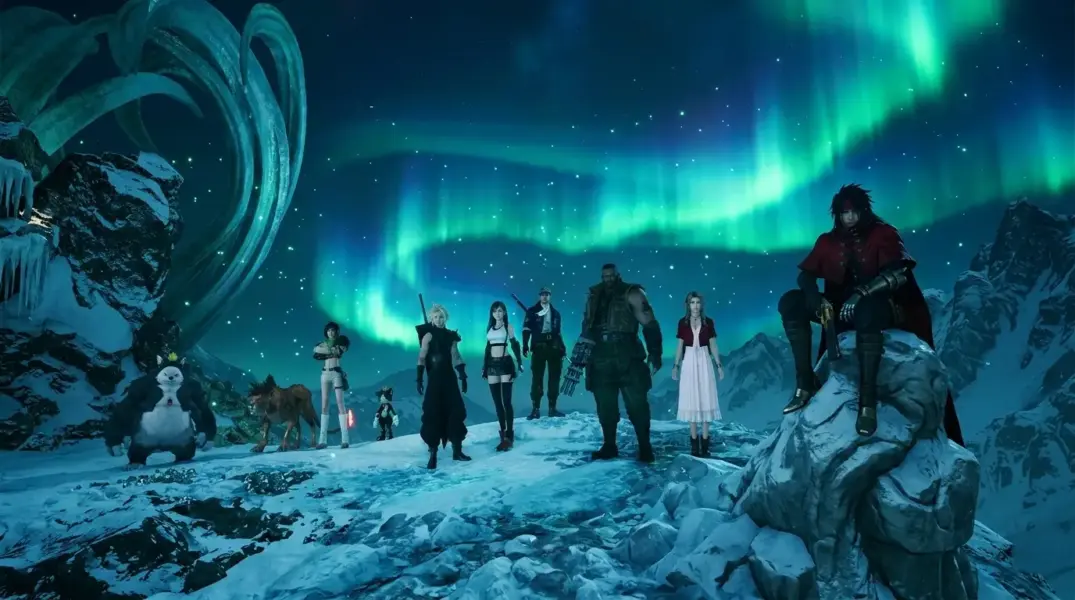
Yes. Revelation is not a standalone entry. It follows directly from both games, and its biggest story questions — Aerith’s fate, Zack’s role, Cloud’s unstable memories, Sephiroth’s plan, and the timeline divergences — depend on having played them. There is no clean entry point here.
Do You Need to Know the Original FFVII?
Not in full, but Revelation is built around the final stretch of that story, and certain concepts are unavoidable: Cloud’s false memories, Aerith and Holy, the Black Materia, Meteor, the Weapons, Mideel, Wutai, Rocket Town, Barret’s history with Corel, Vincent’s history with Hojo, and Cid’s failed space program. Most other details — side quests, optional superbosses, and broader Compilation spin-offs — are background context rather than required reading.
Where Rebirth Leaves the Story
Rebirth ends with the party fractured and grieving after the Forgotten Capital. Cloud’s perception of what happened there differs from the rest of the party’s, leaving a deliberate gap in what players can take as fact. Sephiroth’s plan is no longer a clean retelling of the 1997 game — the Remake trilogy has introduced real divergences with real consequences. The party heads toward the Planet’s final crisis, carrying unresolved losses and a Cloud who may not be mentally stable enough to lead.
Aerith’s Fate and the Lifestream
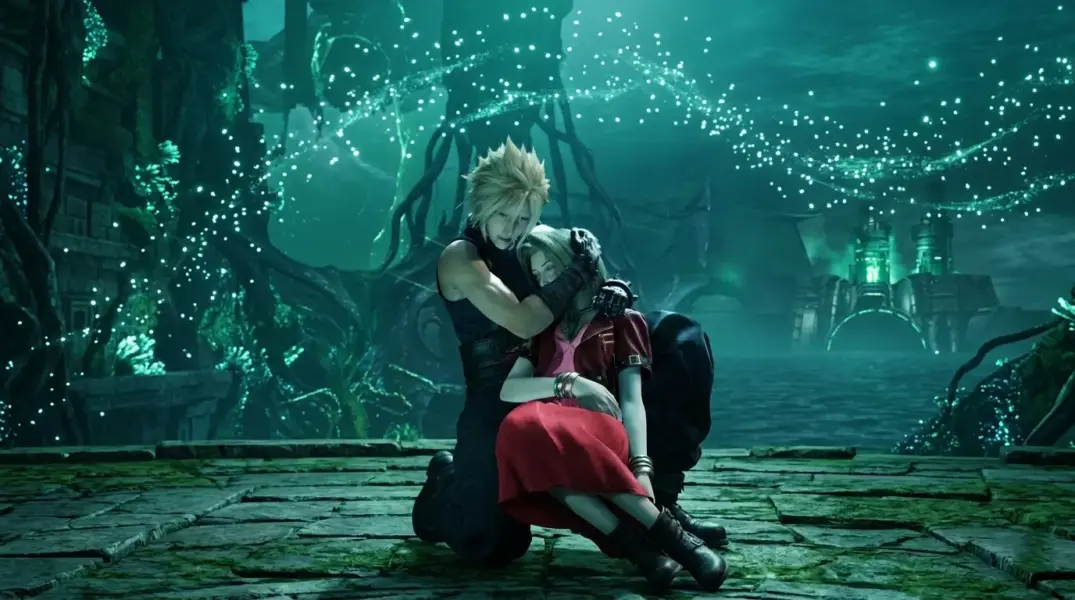
Aerith is the last of the Cetra, an ancient race with a direct connection to the Planet, which makes her central to the endgame in a way no other party member can replicate. In the original FFVII, she uses the White Materia to pray for Holy — the Planet’s counterforce to Meteor — at the Forgotten Capital. After her death, her connection to the Lifestream remains crucial to how the Planet ultimately responds. Rebirth echoes this sequence, but Cloud’s experience of it is deliberately ambiguous. Whether a version of Aerith persists in some form, and how she might still influence events through the Lifestream in Revelation, is one of the trilogy’s biggest open questions.
Zack Fair and the Timeline Mystery
Zack is Cloud’s closest friend from before the story begins, and in the original game, his fate is one of the most important pieces of Cloud’s shattered identity. In Rebirth, Zack is alive — in what appears to be a parallel version of events running alongside the main timeline.
The developers have confirmed he plays a role in Revelation and that his involvement goes further than Rebirth did. The specifics are deliberately withheld. Whether his timeline converges with Cloud’s, and what that means for the resolution, remains unconfirmed. Treat it as a significant open thread.
Cloud’s Memories and the Truth of Nibelheim
Cloud’s backstory is built on false memories. One of FFVII’s biggest reveals is that his version of Nibelheim — the fire, his heroics, his time in SOLDIER — is not accurate. Zack is the person Cloud has been unconsciously modelling himself on.
Mideel is where this fractures completely. After falling into the Lifestream, Cloud’s mind collapses, and Tifa enters it alongside him to piece the truth together. This is one of the most emotionally important sequences in FFVII’s second half, and Revelation will almost certainly adapt it. If Revelation’s marketing puts heavy emphasis on Tifa, that makes sense — she is the person who helps Cloud confront what actually happened, and that confrontation is the key to him functioning at all by the story’s end.
Sephiroth, Jenova, and the Reunion
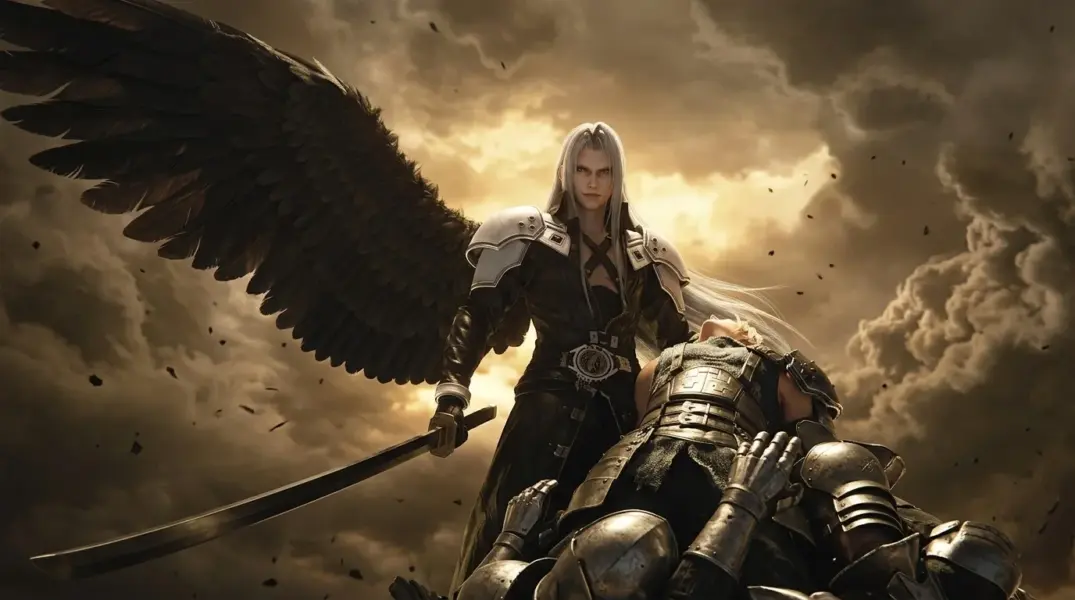
The chain of cause and effect driving FFVII’s crisis runs as follows:
Jenova is an alien entity that fell to the Planet thousands of years ago and nearly destroyed the Cetra. Hojo, a Shinra scientist, used Jenova’s cells in experiments that produced Sephiroth. After Sephiroth’s apparent death at Nibelheim, his will persists through Jenova’s cells — including those injected into Cloud and others during Shinra’s SOLDIER program.
The Reunion is Sephiroth’s ability to draw Jenova’s fragments — and the people carrying those cells — toward a single point. His goal is to use the Black Materia to summon Meteor, strike the Planet, absorb the Lifestream as it converges to heal the wound, and use that energy to achieve godhood. He is not trying to destroy the Planet randomly. He is trying to use its own healing response as fuel.
What the Weapons Are
When the Planet is threatened at a sufficient scale, it deploys Weapons — enormous ancient creatures dormant since the Cetra’s era. They are the Planet’s last-resort defense system.
The important nuance: Weapons are not heroes. They do not distinguish between Shinra, Cloud’s party, or civilian populations — they attack anything connected to the threat, which in practice means widespread destruction. Containing their indiscriminate response is itself a crisis, separate from stopping Sephiroth.
Why Wutai, Mideel, and Rocket Town Matter
Wutai is Yuffie’s homeland and a nation that has been in direct conflict with Shinra. The Remake trilogy has expanded its role considerably beyond the side content it received in 1997. In Revelation, it will likely factor into the final geopolitical backdrop as Shinra’s grip weakens and larger forces converge.
Mideel is emotionally the most important new location in Revelation’s context. Cloud’s mental collapse happens here, and Tifa reconstructs the truth with him. If you know one location to care about in the story, it is this one.
Rocket Town is Cid’s home and the site of Shinra’s failed space program. That dream collapsed after the launch was aborted to save Shera, the engineer still working inside the rocket. Cid’s late-game arc is built on how he processes that failure — and whether he can move past it.
Vincent and Cid
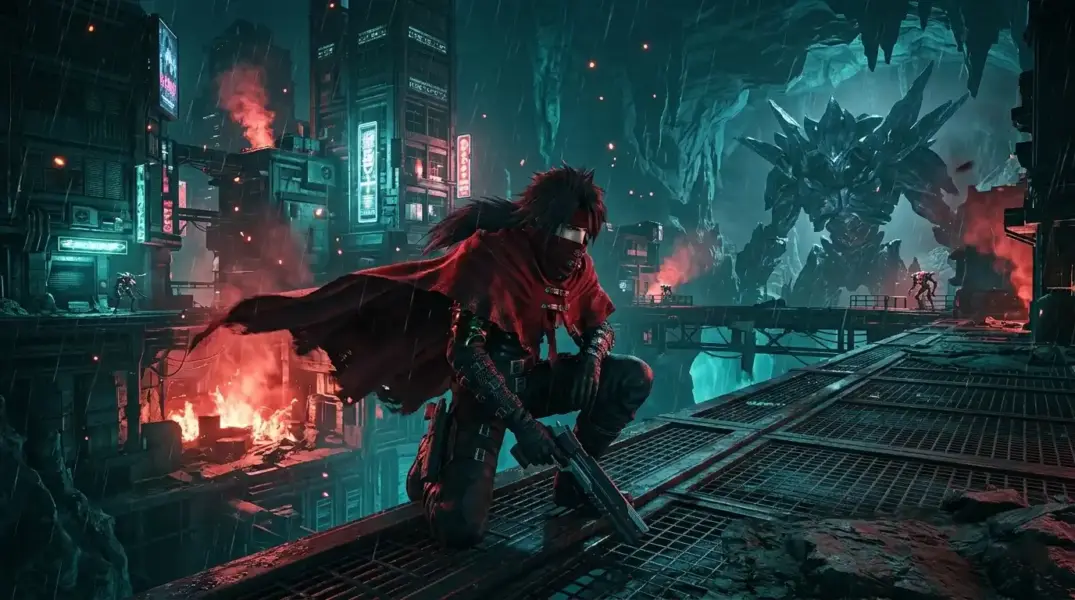
Vincent Valentine was a Turk before the events of FFVII — a Shinra operative whose tragedy is tied to Lucrecia Crescent and Professor Hojo. Lucrecia became part of Hojo’s Jenova research while pregnant with Sephiroth, connecting Vincent’s grief directly to the experiments that created the game’s central villain. Vincent, who had feelings for Lucrecia, was unable to stop it. His punishment for interfering was to become an experimental subject himself — which is why he has spent decades in a coffin beneath the Shinra Mansion. He is not just the gothic gun character; he carries a thread of guilt that runs straight to the core of Sephiroth’s origins.
In Revelation, Vincent joins as a fully playable party member. His combat mixes long-range gunplay with close-range pressure and transformation-based physical power, including his iconic Galian Beast form.
Cid Highwind is a pilot and engineer whose dream was to reach space. His arc covers failure, blame, and eventually choosing to lead — one of the game’s quieter but more genuine character studies. In Revelation, he joins as a playable fighter built around aerial lance combat, capable of rapidly closing distance and controlling crowds with wide AoE strikes.
Quick Lore Timeline
- Jenova crashes into the Planet and devastates the Cetra
- Shinra discovers Jenova and begins the Jenova Project
- Sephiroth is born from Hojo and Lucrecia’s experiments
- Sephiroth burns Nibelheim after learning a distorted version of his origins
- Cloud and Zack are captured and experimented on by Hojo
- Zack dies in the original timeline; Cloud inherits his sword and, unconsciously, his persona
- Remake and Rebirth complicate this by showing Zack alive in what appears to be a parallel world
- Rebirth ends with Aerith’s fate left ambiguous from Cloud’s perspective
- Revelation begins with Meteor looming, the Weapons entering the story, and the Planet’s final crisis fully underway
Known Gameplay Features
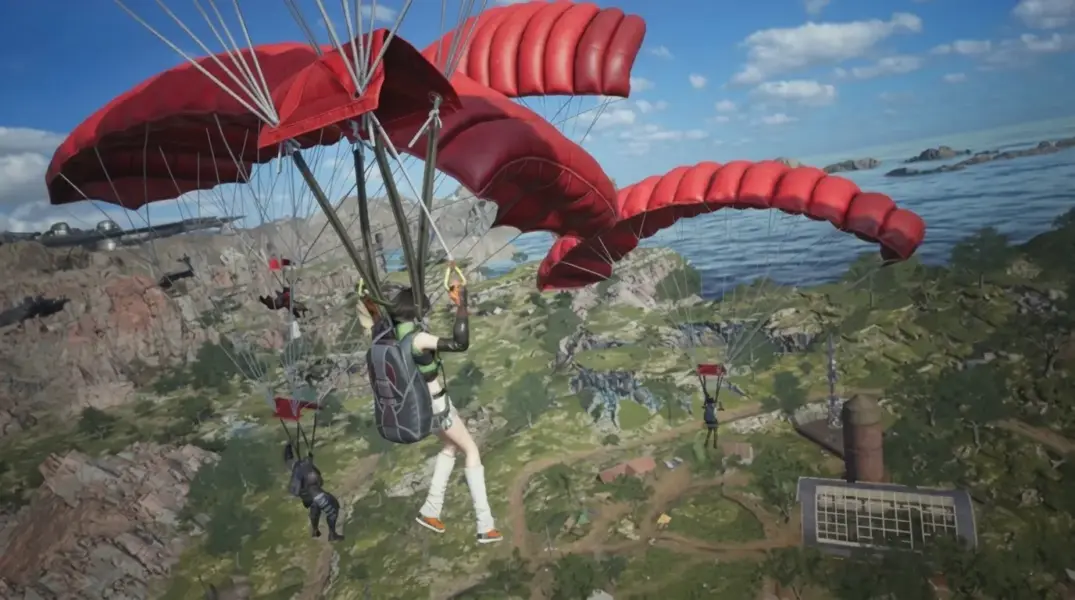
Revelation expands from Rebirth’s region-based structure to a full open world spanning the entire Planet, with oceans separating continents. The Highwind — the series’ iconic airship — is your primary traversal method and reportedly becomes available roughly five to six hours into the story rather than functioning as a late-game reward. Players can parachute from it to drop into explorable areas from above. Returning areas from Rebirth are not carried forward unchanged; Revelation’s world is shaped by Meteor, war, and the awakening of the Weapons.
The hybrid battle system from Remake and Rebirth returns, with real-time character swapping, Tactical Mode for pausing and issuing commands, and Synergy Skills for coordinated high-impact attacks between party members. Summons return as well.
Revelation also introduces FITS, a job-style outfit system where equipping different outfits changes a character’s appearance and unlocks new movesets and combat roles. FITS loadouts are changed between battles rather than during them.
Mini-games return but with more optional settings, easier difficulty toggles, and most rewards shifted toward cosmetics rather than combat-critical upgrades. The Tifa vs. Scarlet confrontation is also confirmed to return.
Finally, save data bonuses: FFVII Remake Intergrade save data unlocks a Chocobo & Moogle Summon Materia, and FFVII Rebirth save data unlocks a Phoenix Summon Materia. Make sure the relevant saves exist on the same platform before launch.
What Is Still Unknown
A lot. For a Spring 2027 release, confirmed details are still relatively high-level. Aerith’s exact state, how Zack’s timeline resolves, whether Revelation closely follows the original ending, the full FITS job list, submarine exploration, post-game content, and whether Compilation elements like Deepground are story-critical or background references — all of it remains unconfirmed. This guide will update when that changes.

Frequently Asked Questions
What is Final Fantasy VII Revelation?
Final Fantasy VII Revelation is the third and final chapter of the FFVII Remake trilogy. It follows the events of Final Fantasy VII Remake and Final Fantasy VII Rebirth, continuing the story of Cloud Strife, Sephiroth, Aerith, Zack Fair, and the alternate timeline mysteries introduced across the remake series.
When does Final Fantasy VII Revelation release?
Final Fantasy VII Revelation is scheduled to release in Spring 2027. Square Enix has not announced a specific release date yet, so the exact day and month are still unconfirmed.
What platforms is Final Fantasy VII Revelation coming to?
Final Fantasy VII Revelation is planned for PS5, Nintendo Switch 2, Xbox Series X|S, Steam, and the Epic Games Store. Unlike the previous remake games, Revelation is expected to launch on these platforms simultaneously instead of starting as a PlayStation-first release.
Do you need to play Final Fantasy VII Remake and Rebirth before Revelation?
Yes. Revelation is not designed as a standalone entry. Its biggest story questions — Aerith’s fate, Zack’s role, Cloud’s unstable memories, Sephiroth’s plan, and the timeline divergences — all build directly from Remake and Rebirth.
Do you need to play the original Final Fantasy VII before Revelation?
You do not need to play the original Final Fantasy VII in full, but knowing its key events helps a lot. Revelation is built around the original game’s final stretch, including Cloud’s false memories, Aerith and Holy, the Black Materia, Meteor, the Weapons, Mideel, Wutai, Rocket Town, Barret’s history with Corel, Vincent’s connection to Hojo, and Cid’s failed space program.
What happened at the end of Final Fantasy VII Rebirth?
Final Fantasy VII Rebirth ends with the party fractured after the events at the Forgotten Capital. Cloud’s perception of Aerith’s fate differs from what the rest of the party appears to understand, leaving the ending deliberately ambiguous. The group moves toward the Planet’s final crisis with unresolved grief, timeline questions, and Cloud’s mental state more unstable than ever.
Is Aerith alive or dead in Final Fantasy VII Revelation?
Aerith’s exact state in Revelation is still unconfirmed. In the original FFVII, Aerith dies at the Forgotten Capital after praying for Holy, but her connection to the Lifestream remains vital to the finale. Rebirth echoes that event while making Cloud’s experience of it ambiguous, leaving open the question of whether Aerith persists through the Lifestream, another timeline, or something else entirely.
What is Zack Fair’s role in Final Fantasy VII Revelation?
Zack Fair is expected to remain an important part of Revelation’s story. In the original FFVII, Zack’s death is central to Cloud’s false identity, but Rebirth shows Zack alive in what appears to be a parallel timeline. The developers have confirmed that Zack’s involvement continues in Revelation, but how his timeline connects to Cloud’s main party is still unknown.
What are the Weapons in Final Fantasy VII Revelation?
The Weapons are enormous ancient creatures created by the Planet as a last-resort defense system. They awaken when the Planet faces a catastrophic threat, such as Meteor and Sephiroth’s plan. However, the Weapons are not simple heroes — they attack indiscriminately and can cause massive destruction, forcing Cloud’s party to deal with them as a crisis of their own.
What is the FITS system in Final Fantasy VII Revelation?
FITS, short for Function Integrated Tactical Suitwear, is a new job-style outfit system in Final Fantasy VII Revelation. By equipping different outfits, characters can change appearance and gain new movesets or combat roles, such as shifting toward magic-focused or physical builds. FITS loadouts are changed between battles rather than during active combat.