Deadlock is Valve’s most unconventional multiplayer project in years—a third-person MOBA shooter that has spent its development growing quietly, largely invite-only, and without the usual commercial live-service scaffolding. In 2026, however, Deadlock feels less like an experiment and more like a game that has locked in its identity. Recent updates haven’t just expanded content; they’ve clarified direction, signaling what Deadlock is trying to be and who it’s being built for.
This guide breaks down where Deadlock stands in 2026, why momentum is building despite its limited access, and what its current design choices say about its long-term future.
In this guide, we’ll cover:
- What kind of game Deadlock actually is, and how it blends MOBA macro with shooter mechanics
- How match flow, objectives, and win conditions shape the core experience
- Why movement, verticality, and melee combat define its skill ceiling
- The impact of recent hero additions and meta disruption
- What Street Brawl mode changes for onboarding and accessibility
- How Deadlock’s art direction and character design support long-term engagement
- Current player and viewer momentum, including its emerging showmatch ecosystem
- What’s still missing, the risks ahead, and whether Deadlock can become a lasting Valve title
TL;DR — Why Deadlock Matters Right Now
- Deadlock remains invite-only, but player visibility and total hours watched are increasing.
- The hero roster has expanded to 38 characters, with six new additions changing the meta landscape.
- Street Brawl, a new fast-paced mode, significantly lowers the barrier to entry for mechanical practice.
- The game blends MOBA structure with complex movement, verticality, and melee combat.
- Strong character design and a growing competitive “showmatch” ecosystem are securing its long-term pillars.
Why Deadlock Is Picking Up Steam in 2026
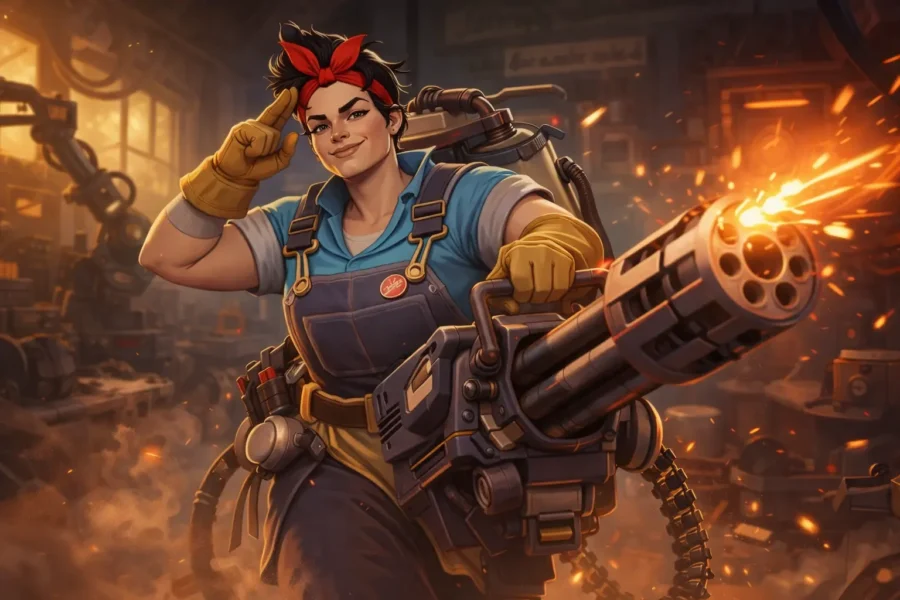
One of the most reliable signs that a multiplayer game is taking root isn’t matchmaking speed — it’s community behavior. Deadlock’s presence across social platforms has grown steadily, driven by character-focused discussion and a high cadence of fan art. Whether it’s viral hero mechanics clips or lore deep-dives, players are attaching themselves to the game’s identity rather than just its patch notes.
The recent update amplified this effect by pairing meaningful gameplay additions with characters that are visually distinct and mechanically expressive, signaling that Valve is ready to let the game’s personality lead its growth.
What Kind of Game Is Deadlock?
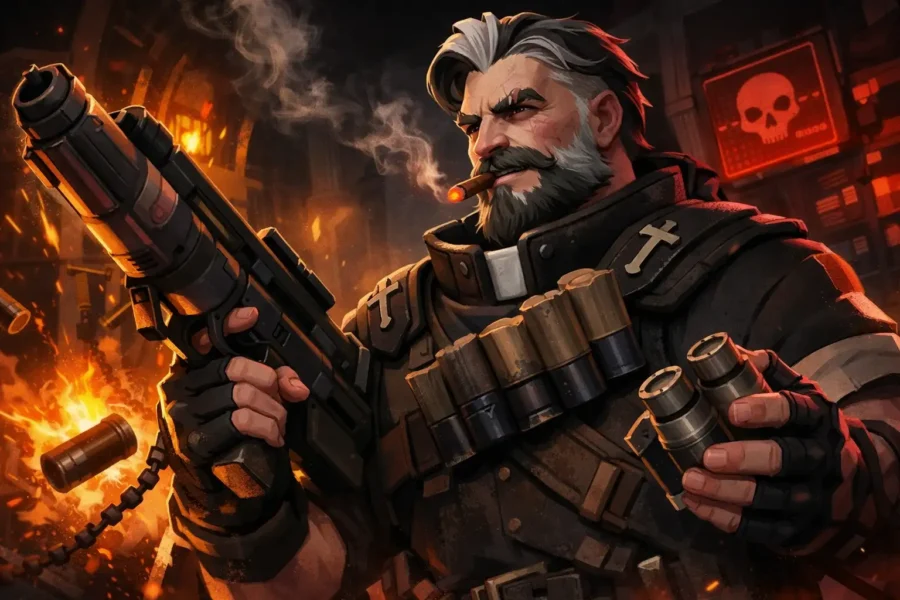
At a structural level, Deadlock is unmistakably a MOBA, but it rejects the “role-lock” rigidity of its peers. While teams need to cover specific “jobs”—such as initiation, objective burn, or utility peel—players aren’t funneled into fixed classes. Roles are emergent, often shifting mid-match based on how you spend your Souls. That flexibility makes drafts less about “perfect comps” and more about covering essentials: engage, peel, and objective damage.
Matches follow a clear “objective ladder” that dictates the flow:
- Laning: Secure Souls and push past the Guardians.
- Mid-Game: Topple the Walkers to open rotations.
- Base Break: Breach the enemy stronghold and destroy the Shrines.
- The Finale: Defeat the Patron. Unlike a simple health bar, the Patron is a multi-stage boss that must be defeated, then finished off in its weakened state to secure the win.
This progression often produces matches that last between 25 and 45 minutes, rewarding teams that can convert successful combat into structural pressure.
How Movement and Combat Redefine the MOBA Formula
Deadlock’s core gameplay loop is built around mobility. Every hero operates within a shared movement framework: directional dodges, wall-running, ground slides, and double jumps. Vertical positioning isn’t optional—it’s the baseline. Mastery of this parkour system allows players to outmaneuver opponents in ways that top-down MOBAs cannot replicate.
Beyond the lanes, the match flow is anchored by two critical “fight magnets.” First is the Soul Urn, a team-wide economy boost that must be carried to a drop-off point—often forcing coordinated rotations. Second is the Mid-Boss, which drops the Rejuvenator buff for massive momentum.
However, Deadlock doesn’t reward winning fights unless you turn them into structures or major objectives. Teams that chase kills without converting them into a Walker, an Urn turn-in, or a Mid-Boss timing often find the game “resets” faster than expected. This focus on objective conversion separates the veterans from the shooter-only crowd.
Who Are the New Heroes and Why Do They Matter?
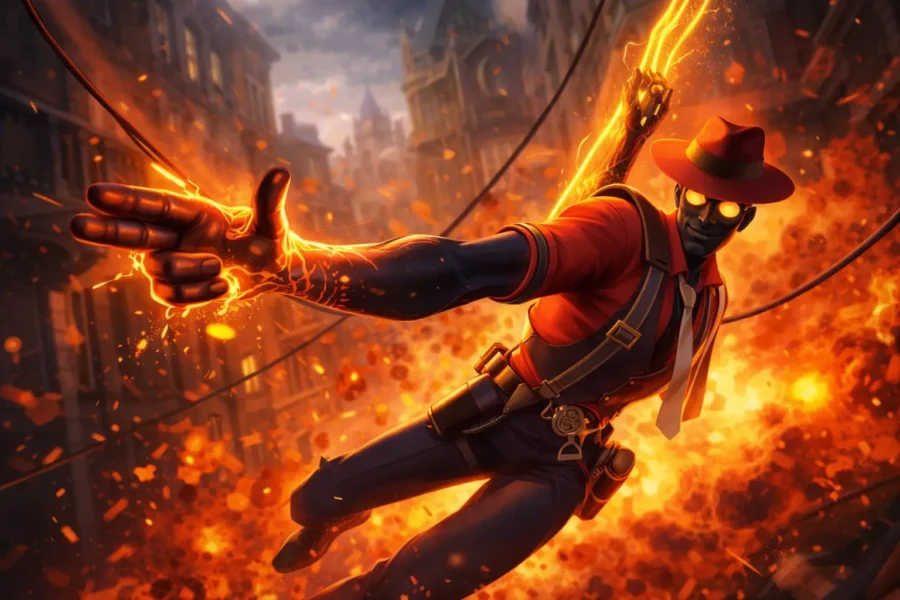
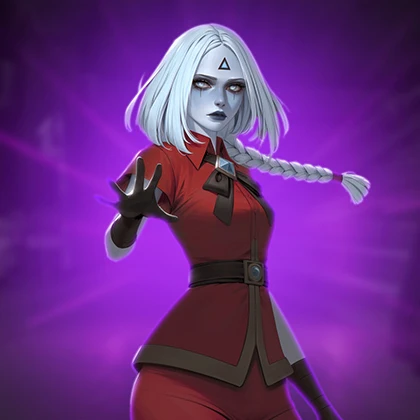
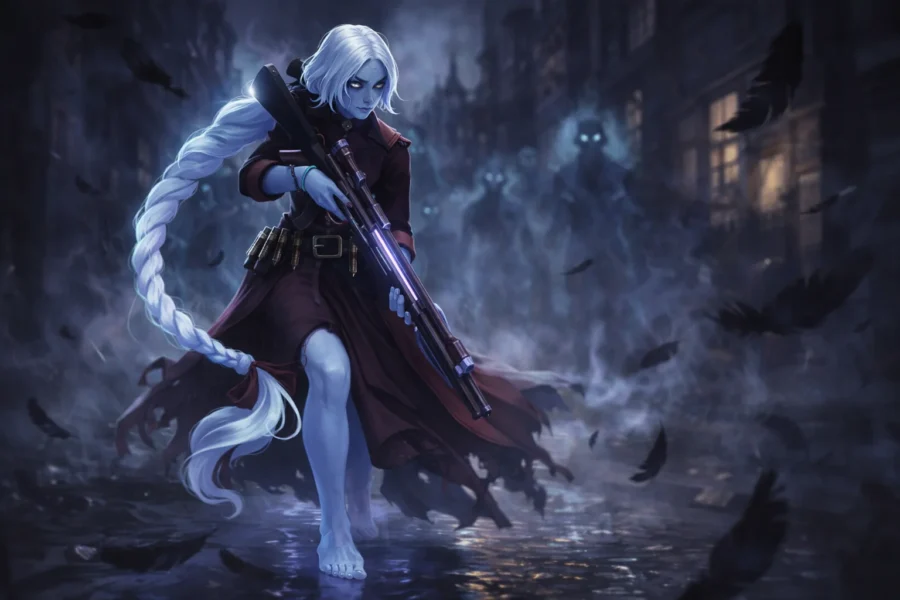
The latest update introduced six heroes at once, a move that intentionally disrupted the established meta and forced players to rethink team compositions:
- Apollo — an aggressive, blade-focused demon
- Celeste — a performer-themed hero built around control and presence
- Venator — a priest-like specialist with weapon-centric abilities
- Rem — a utility-focused character centered on sleep and minions
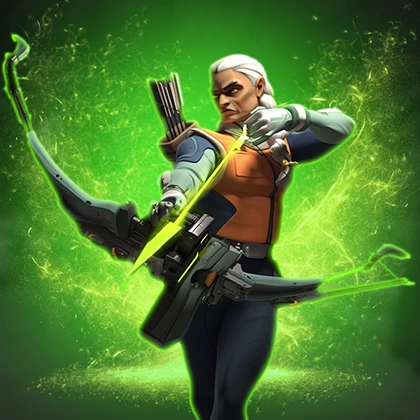
- Silver — a mobile bounty hunter with predator-style mechanics
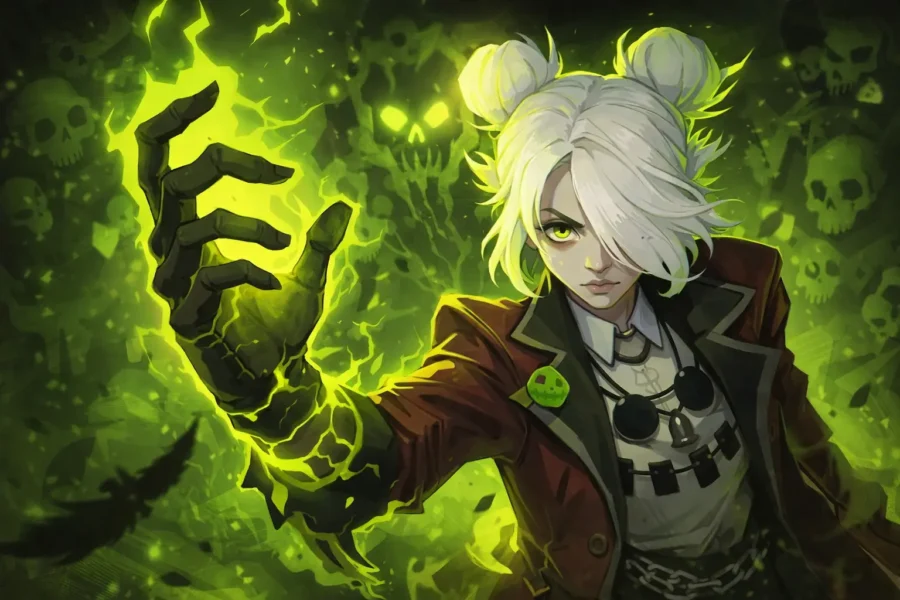
- Graves — a necromancer who leans into summons and attrition
Rather than a standard rollout, Valve allowed the community to vote on the unlock order. This communal event prevents the meta from stagnating and rewards players who can adapt to “experimental churn.”
How Deadlock Compares to Traditional MOBAs
| System | Deadlock | Traditional MOBAs |
| Camera perspective | Third-person | Top-down |
| Movement complexity | High (parkour, dodges) | Limited |
| Melee combat | Core mechanic | Rare / Hero-specific |
| Vertical map design | Central | Minimal / Layered |
| Learning modes | Street Brawl | ARAM-style variants |
What Is Street Brawl and Why Is It Important?
Street Brawl is Deadlock’s most impactful onboarding feature. The mode places two 4v4 teams on a single lane in a “first to three wins” (best-of-five) format, featuring equalized resources and no farming.
This mode addresses Deadlock’s steep “double-entry” learning curve. New players often struggle because they are learning two languages at once: shooter fundamentals (aim, peeking) and MOBA fundamentals (economy, macro). By stripping away the macro pressure, Street Brawl lets players lower their “mechanical debt” in a low-stress environment. It functions as both a combat warm-up and a practical way to master a hero’s kit before committing to the full strategic weight of a standard match.
Why Deadlock’s Art Direction Feels Distinct
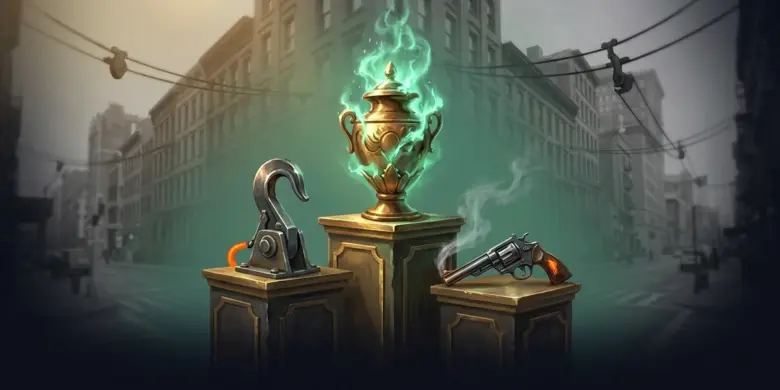
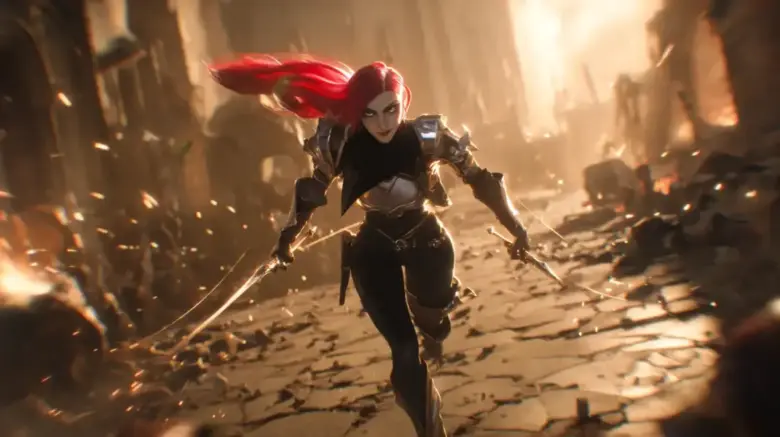
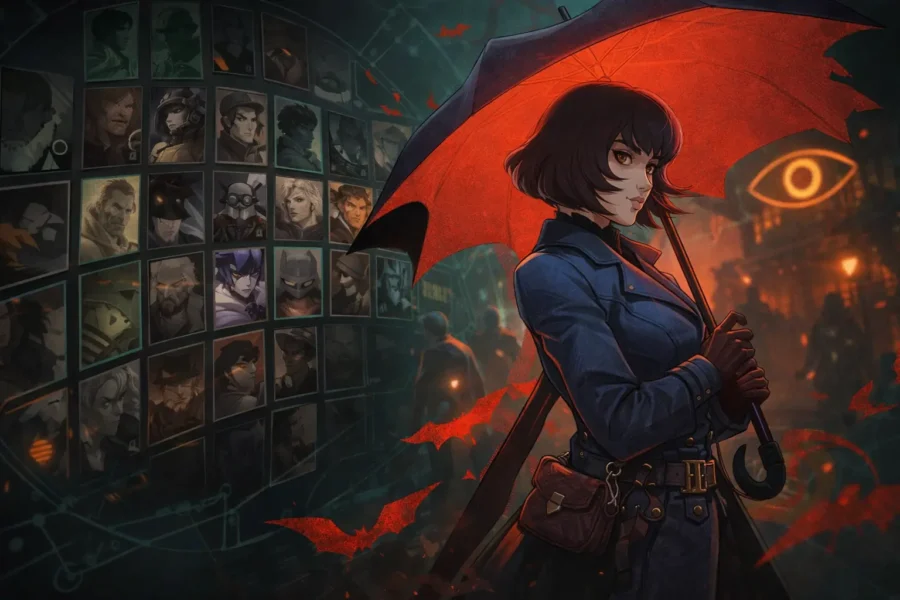
Deadlock’s world blends noir urban spaces with occult fantasy and light steampunk influences. Instead of leaning into sterile sci-fi or generic fantasy, the game presents a grimy, stylized version of New York filled with strange characters and unsettling details. This aesthetic choice pays off because it’s consistent; UI and dialogue reinforce the same tone, making the world feel cohesive rather than decorative.
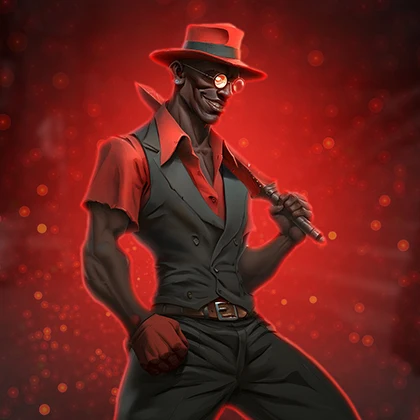
Why Characters Are the Core of Deadlock’s Longevity
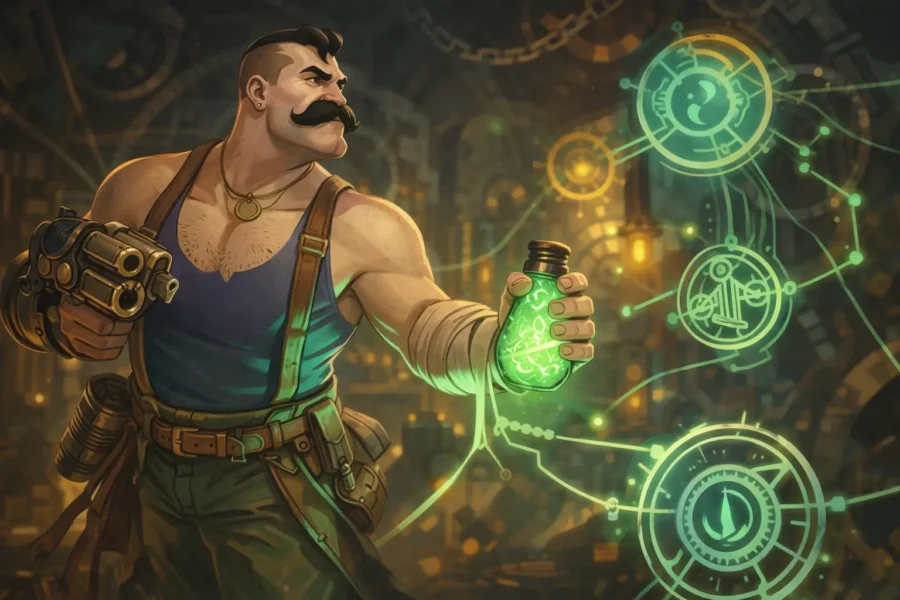
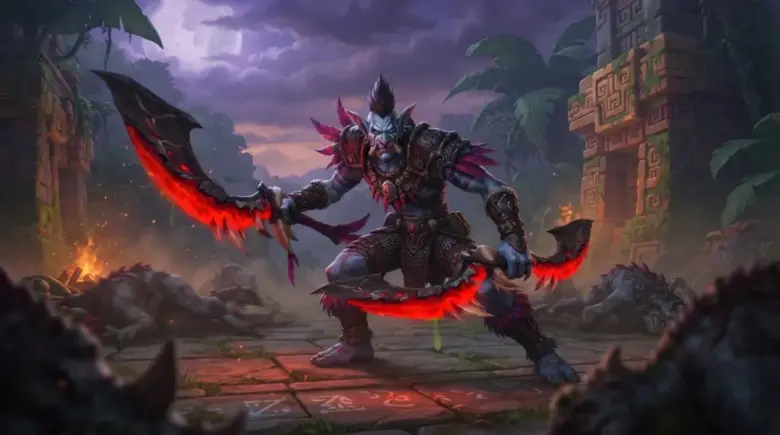
In any MOBA, characters are what keep players coming back. Deadlock heroes are designed not just around mechanics, but around personality. Portraits change based on in-match conditions, dialogue reacts to events, and interactions between heroes add texture without overwhelming gameplay. New additions like Graves and Rem highlight this approach, pairing unconventional visuals with kits that feel immediately readable and memorable.
How Popular Is Deadlock Right Now?
Deadlock’s growth remains steady, having recently crossed the 100,000 concurrent player mark again following the latest update. While player counts remain volatile due to the game’s invite-only status, the “watchability” of the game is climbing.
In early 2026, Deadlock viewership had reached millions of hours watched across streaming platforms. This is bolstered by an emerging “showmatch” layer and a robust set of observer tools. It is becoming a game people increasingly enjoy watching alongside playing—a vital prerequisite for any Valve title’s longevity.
What’s Missing — and Why That Might Be a Strength
Deadlock is still early in its lifecycle. An explicit ranked mode, monetization systems, and progression ladders are all absent for now. However, this lack of monetization pressure gives the game room to breathe; players are experimenting without the “optimization-only” mindset that a battle pass often forces.
There are, however, concrete risks. The “onboarding debt” remains high, and constant balance churn can be exhausting for the semi-casual base. Valve’s challenge in 2026 is managing this complexity without diluting the depth that makes the game unique.
Can Deadlock Become a Long-Term Valve Title?
That answer depends on what comes next. Momentum alone doesn’t guarantee longevity. But the recent update marks a transition from experimentation to cohesion. Systems are aligning, the roster is taking shape, and the world feels increasingly alive through its community and spectator ecosystem.
For now, Deadlock occupies a rare space: a competitive multiplayer game still discovering itself — and inviting players to do the same.

Frequently Asked Questions
What kind of game is Deadlock? Is it a MOBA or a shooter?
Deadlock is a true hybrid. You win by following MOBA macro principles like lane pressure, objective control, and destroying the Patron, but you play moment-to-moment like a high-mobility third-person shooter. Ignoring either side of the design will consistently lose games.
Is Deadlock still invite-only in 2026?
Yes. Despite its rising visibility, Valve continues to use an invite-only access model. This controlled rollout allows rapid iteration and balance changes while maintaining a focused test community. You still need an invite from a Steam friend who already has access.
What is Street Brawl mode in Deadlock and how does it work?
Street Brawl is a 4v4, single-lane, best-of-five mode. It removes farming, item shops, and macro objectives, focusing entirely on hero mechanics, aim, and team fighting. It’s ideal for learning characters before committing to full 6v6 matches.
How many heroes are currently in Deadlock?
There are 38 playable heroes. Recent additions have expanded team roles significantly, including necromancy-based sustain heroes, crowd-control specialists, and extreme mobility assassins.
Does Deadlock have ranked mode or monetization systems yet?
As of early 2026, there is no official ranked ladder, battle pass, or cosmetic store. Matchmaking uses hidden MMR to keep games competitive, but visible ranks and monetization systems have not yet been introduced.
How does progression work in Deadlock if there is no ranked mode?
Progression is primarily knowledge-based. Players improve through hero mastery, mechanical skill, map awareness, and understanding macro decisions rather than grinding visible ranks or rewards.
How long does a typical Deadlock match last?
Standard 6v6 matches usually last between 25 and 40 minutes, depending on team coordination and objective control. Street Brawl matches are much shorter, often ending within 10–15 minutes.
Is Deadlock more about mechanics or strategy?
Both are equally important. Strong aim and movement win skirmishes, but poor macro decisions—such as ignoring lanes or objectives—will still cost games. Deadlock heavily rewards players who balance mechanical skill with strategic awareness.
How important are lanes in Deadlock?
Lanes are critical. Controlling lanes provides map pressure, resource advantages, and safer rotations. Teams that ignore lane management often fall behind even if they win early fights.
What happens if you only focus on kills and ignore objectives?
You will usually lose. Kills provide momentum, but objectives are the real win condition. Teams that convert fights into lane pushes and Patron damage consistently outperform kill-focused teams.
Can new players compete without prior MOBA experience?
Yes, but there is a learning curve. Shooter players often adapt quickly to aiming and movement, while MOBA players excel at macro decisions. Street Brawl helps bridge the gap by teaching combat fundamentals first.
How difficult is Deadlock to learn compared to other shooters?
Deadlock is more complex than traditional shooters due to its layered systems, but less overwhelming than classic MOBAs. The hybrid design makes early matches approachable while still offering deep mastery.
Are heroes locked behind progression or unlock systems?
No. All heroes are available without grinding unlocks, allowing players to freely experiment with different playstyles and team compositions from the start.
How important is team composition in Deadlock?
Team composition matters, but it is flexible. Most teams benefit from a mix of damage, control, and survivability, but strong execution can often compensate for imperfect comps.
Does Deadlock punish solo players?
Not excessively. While coordinated teams have an advantage, solo players can still carry through strong mechanics, smart positioning, and objective awareness. Matchmaking attempts to balance team skill levels.
Is Deadlock balanced around casual or competitive play?
Currently, Deadlock leans toward competitive balance. Frequent updates and tuning suggest Valve is prioritizing long-term depth over short-term accessibility.
How often does Deadlock receive updates?
Deadlock receives regular balance patches and content updates. These often adjust hero abilities, map flow, and systemic mechanics rather than adding monetization features.
Are there non-hero enemies in Deadlock?
Yes. Non-hero units like troopers play a major role in lane pressure and objective progression. Managing them effectively is a core part of winning matches.
Can you win Deadlock games through macro play alone?
No. Strong macro decisions help, but poor mechanical execution will still get punished. Deadlock requires competence in both planning and execution to consistently win.
Is Deadlock worth learning now, or should players wait for full release?
Deadlock is absolutely worth learning now. Early players gain a major advantage by understanding systems and heroes before ranked modes, progression systems, and larger player influxes arrive.